Math Is Fun Forum
You are not logged in.
- Topics: Active | Unanswered
#426 Re: Jai Ganesh's Puzzles » Oral puzzles » 2026-02-23 14:51:33
Hi,
#6356.
#427 Re: Jai Ganesh's Puzzles » 10 second questions » 2026-02-23 14:30:54
Hi,
#9862.
#428 Re: Exercises » Compute the solution: » 2026-02-23 14:13:57
Hi,
2716.
#429 This is Cool » Boiler » 2026-02-22 22:51:20
- Jai Ganesh
- Replies: 0
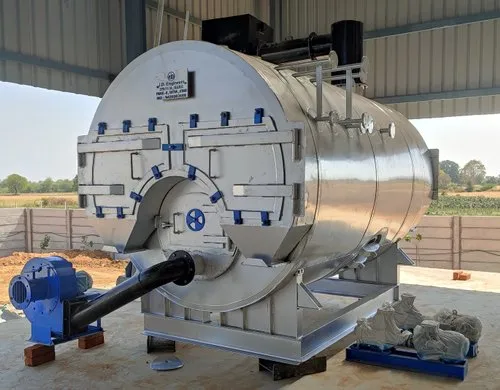
Boiler
Gist
A boiler is a closed pressure vessel that heats water or other liquids to produce hot water or steam for heating, sanitation, or power generation. Utilizing energy sources like gas, oil, coal, or electricity, it acts as a heat exchanger, transferring heat from combustion to water. Key types include fire-tube (hot gases inside tubes) and water-tube (water inside tubes) boilers.
Boilers heat water to create steam or hot water for various applications, primarily for heating buildings (central heating, radiators) and driving industrial processes like power generation, cooking, sterilizing, and running turbines in factories, making them essential for both homes and large-scale manufacturing. They convert fuel (gas, oil, coal, biomass) or electricity into thermal energy for these diverse needs, from simple domestic hot water to complex pharmaceutical production.
Summary
A boiler is an enclosed vessel that provides a means for combustion and transfers heat to water until it becomes hot water or steam. The hot water or steam under pressure is then usable for transferring the heat to a process.
Water is useful and cheap medium for transferring heat to a process. When water is boiled into steam its volume increases about 1,600 times, producing a force that is almost as explosive as gunpowder. This causes the boiler to be extremely dangerous equipment and should be treated carefully.
Liquid when heated up to the gaseous state this process is called evaporation.
The heating surface is any part of the boiler; hot gases of combustion are on one side and water on the other. Any part of the boiler metal that actually contributes to making steam is heating surface. The amount of heating surface of a boiler is expressed in square meters. The larger the heating surface a boiler has, the more efficient it becomes.
The boiler system is made up of :
1. Feed water system
2. Steam system
3. Fuel system
The feed water system provides water to the boiler and regulates it automatically to meet the steam demand. The water supplied to boiler that is converted to steam is called feed water. The sources of feed water are:
1. Condensate or condensed steam returned from the processes
2. Makeup water which is the raw water which must come from outside the boiler room and plant processes.
The steam system collects and controls the steam produced in the boiler. Steam is directed through a piping system to the point of use. Throughout the system, steam pressure is regulated using valves and checked with steam pressure gauges.
The fuel system includes all equipment used to provide fuel to generate the necessary heat. The equipments required in the fuel system depend on the type of fuel used in the system.
Details
A boiler is a closed vessel in which fluid (generally water) is heated. The fluid does not necessarily boil. The heated or vaporized fluid exits the boiler for use in various processes or heating applications, including water heating, central heating, boiler-based power generation, cooking, and sanitation.
Heat sources
In a fossil fuel power plant using a steam cycle for power generation, the primary heat source will be combustion of coal, oil, or natural gas. In some cases byproduct fuel such as the carbon monoxide rich offgasses of a coke battery can be burned to heat a boiler; biofuels such as bagasse, where economically available, can also be used. In a nuclear power plant, boilers called steam generators are heated by the heat produced by nuclear fission. Where a large volume of hot gas is available from some process, a heat recovery steam generator or recovery boiler can use the heat to produce steam, with little or no extra fuel consumed; such a configuration is common in a combined cycle power plant where a gas turbine and a steam boiler are used. In all cases the combustion product waste gases are separate from the working fluid of the steam cycle, making these systems examples of external combustion engines.
Materials
The pressure vessel of a boiler is usually made of steel (or alloy steel), or historically of wrought iron. Stainless steel, especially of the austenitic types, is not used in wetted parts of boilers due to corrosion and stress corrosion cracking. However, ferritic stainless steel is often used in superheater sections that will not be exposed to boiling water, and electrically heated stainless steel shell boilers are allowed under the European "Pressure Equipment Directive" for production of steam for sterilizers and disinfectors.
In live steam models, copper or brass is often used because it is more easily fabricated in smaller size boilers. Historically, copper was often used for fireboxes (particularly for steam locomotives), because of its better formability and higher thermal conductivity; however, in more recent times, the high price of copper often makes this an uneconomic choice and cheaper substitutes (such as steel) are used instead.
For much of the Victorian "age of steam", the only material used for boilermaking was the highest grade of wrought iron, with assembly by riveting. This iron was often obtained from specialist ironworks, such as those in the Cleator Moor (UK) area, noted for the high quality of their rolled plate, which was especially suitable for use in critical applications such as high-pressure boilers. In the 20th century, design practice moved towards the use of steel, with welded construction, which is stronger and cheaper, and can be fabricated more quickly and with less labour. Wrought iron boilers corrode far more slowly than their modern-day steel counterparts, and are less susceptible to localized pitting and stress-corrosion. That makes the longevity of older wrought-iron boilers far superior to that of welded steel boilers.
Cast iron may be used for the heating vessel of domestic water heaters. Although such heaters are usually termed "boilers" in some countries, their purpose is usually to produce hot water, not steam, and so they run at low pressure and try to avoid boiling. The brittleness of cast iron makes it impractical for high-pressure steam boilers.
Energy
The source of heat for a boiler is combustion of any of several fuels, such as wood, coal, oil, or natural gas. Electric steam boilers use resistance- or immersion-type heating elements. Nuclear fission is also used as a heat source for generating steam, either directly (BWR) or, in most cases, in specialised heat exchangers called "steam generators" (PWR). Heat recovery steam generators (HRSGs) use the heat rejected from other processes such as gas turbine.
PWR : Pressurized Water Reactor.
BWR : Boiling Water Reactor.
HRGS : Heat Recovery Steam Generators.
Additional Information:
What is a Boiler?
A pressure vessel that provides a heat transfer surface (generally a set of tubes) between the combustion products and the water. A boiler is usually integrated into a system with many components.
Why use a Boiler?
Boilers are used to produce steam. The generation part of a steam system uses a boiler to add energy to a feedwater supply to generate steam. The energy is released from the combustion of fossil fuels or from process waste heat.
Where are Boilers Used?
Anywhere you are creating heat and/or steam, you will probably find a boiler. ABMA (American Boilers Manufacturers Association) members produce large boilers for the commercial, industrial, utility sector and more. Boiler systems are used to create pulp & paper, generate electricity and process foods. The complexity significantly increases as you increase the size and need for greater performance of the boiler system.
What are the major components of the Boiler System?
The boiler itself is a main component of a generation system that also includes the fuel supply, combustion air system, feedwater system, and exhaust gases venting system. ABMA members also manufacture the following components.
* Burner
* Controls
* Deaerator
* Economizer
* Fan
* Heat Exchanger
* Instrumentation
* Stoker
* Tubes
What are the basic types of Boilers?
There are two basic types of boilers: firetube and watertube. The fundamental difference between these boiler types is which side of the boiler tubes contain the combustion gases or the boiler water/steam.
Firetube Boiler
In firetube boilers, the combustion gases pass inside boiler tubes, and heat is transferred to water between the tubes and the outer shell. Today, larger firetube boilers are over 1,500 boiler horsepower (about 50,000 pounds per hour. Firetube boilers are often characterized by their number of passes, referring to the number of times the combustion (or flue) gases flow the length of the pressure vessel as they transfer heat to the water. The turnaround zones can be either dryback or waterback. In dryback designs, the turnaround area is refractory-lined. In waterback designs, this turnaround zone is water-cooled, eliminating the need for the refractory lining.
Watertube Boiler
In watertube boilers, boiler water passes through the tubes while the exhaust gases remain in the shell side, passing over the tube surfaces. Because tubes can typically withstand higher internal pressure than the large chamber shell in a firetube, watertube boilers are used where high steam pressures (3,000 psi, sometimes higher) are required. Watertube boilers are also capable of high efficiencies and can generate saturated or superheated steam. In fact, the ability of watertube boilers to generate superheated steam makes these boilers particularly attractive in applications that require dry, high-pressure, high energy steam, including steam turbine power generation. The performance characteristics of watertube boilers make them highly favorable in process industries, including chemical manufacturing, pulp and paper manufacturing, and refining. Although firetube boilers account for the majority of boiler sales in terms of units, watertube boilers account for the majority of boiler capacity.
Waste Heat Recovery Boiler (WHRB)
These boilers may be either firetube or watertube design and use heat that would otherwise be discarded to generate steam. Typical sources of heat for WHRBs include exhaust gases or high-temperature products from an external manufacturing process in refineries and chemical manufacturing facilities, or combustion of a waste fuel in the boiler furnace.
Heat Recovery Steam Generators (HRSGs)
HRSGs transfer energy from the exhaust of a gas turbine to an unfired or supplementary fired heat-recovery steam generator to produce steam. Exhaust gases leave the gas turbine at temperatures of 1,000°F (538°C) or higher and can represent more than 75% of the total fuel energy input. This energy can be recovered by passing the gases through a heat exchanger (steam generator) to produce hot water or steam for process needs.
#430 Re: Dark Discussions at Cafe Infinity » crème de la crème » 2026-02-22 18:00:01
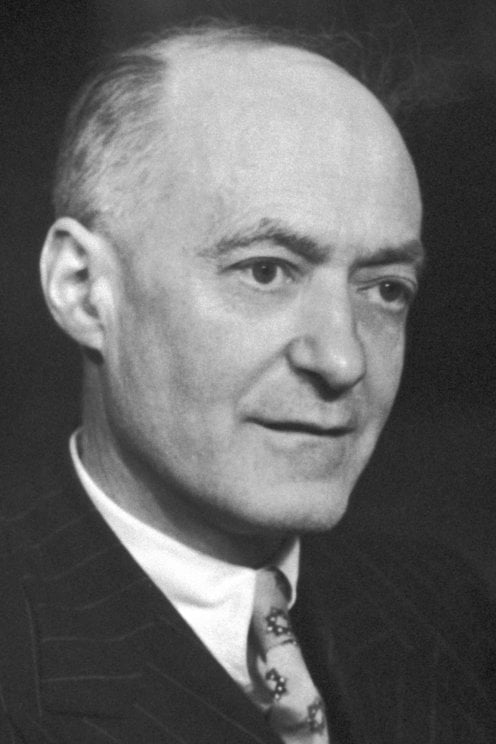
2439) Cyril N. Hinshelwood
Gist:
Work
During chemical reactions, atoms and molecules regroup and form new constellations. When molecules formed during a reaction readily react with molecules present from the beginning, a chain reaction can occur. Explosions and fire are examples of chain reactions. During the 1930s Cyril Hinshelwood analyzed conditions and sequences of events involved in chain reactions from a theoretical standpoint. Among other things, he found that the theoretical results corresponded with observations of the reaction between hydrogen and oxygen.
Summary
Sir Cyril Norman Hinshelwood (born June 19, 1897, London, Eng.—died Oct. 9, 1967, London) was a British chemist who worked on reaction rates and reaction mechanisms, particularly that of the combination of hydrogen and oxygen to form water, one of the most fundamental combining reactions in chemistry. For this work he shared the 1956 Nobel Prize for Chemistry with the Soviet scientist Nikolay Semyonov.
Hinshelwood obtained his doctorate at the University of Oxford in 1924 and became professor of chemistry there in 1937. After retiring from Oxford in 1964 he became a senior research fellow at Imperial College, London.
About 1930 Hinshelwood began investigating the complex reaction in which hydrogen and oxygen atoms combine to form water. He showed that the products of this reaction help to spread the reaction further in what is essentially a chain reaction.
He next sought to explore molecular kinetics within the bacterial cell. Upon observing the biological responses of bacteria to changes in environment, he concluded that more or less permanent changes in a cell’s resistance to a drug could be induced. This finding was important in regard to bacterial resistance to antibiotic and other chemotherapeutic agents. Hinshelwood was knighted in 1948. His publications include The Kinetics of Chemical Change in Gaseous Systems (1926) and The Chemical Kinetics of the Bacterial Cell (1946).
Details
Sir Cyril Norman Hinshelwood (19 June 1897 – 9 October 1967) was a British physical chemist and expert in chemical kinetics. His work in reaction mechanisms earned the 1956 Nobel Prize in chemistry.
Education
Born in London, his parents were Norman Macmillan Hinshelwood, a chartered accountant, and Ethel Frances née Smith. He was educated first in Canada, returning in 1905 on the death of his father to a small flat in Chelsea where he lived for the rest of his life. He then studied at Westminster City School and Balliol College, Oxford.
Career
During the First World War, Hinshelwood was a chemist in an explosives factory. He was a tutor at Trinity College, Oxford, from 1921 to 1937 and was Dr Lee's Professor of Chemistry at the University of Oxford from 1937. He served on several advisory councils on scientific matters to the British Government.
His early studies of molecular kinetics led to the publication of Thermodynamics for Students of Chemistry and The Kinetics of Chemical Change in 1926. With Harold Warris Thompson he studied the explosive reaction of hydrogen and oxygen and described the phenomenon of chain reaction. His subsequent work on chemical changes in the bacterial cell proved to be of great importance in later research work on antibiotics and therapeutic agents, and his book, The Chemical Kinetics of the Bacterial Cell was published in 1946, followed by Growth, Function and Regulation in Bacterial Cells in 1966. In 1951 he published The Structure of Physical Chemistry. It was republished as an Oxford Classic Texts in the Physical Sciences by Oxford University Press in 2005.
The Langmuir-Hinshelwood process in heterogeneous catalysis, in which the adsorption of the reactants on the surface is the rate-limiting step, is named after him. He was a senior research fellow at Imperial College London from 1964 to 1967.
Awards and honours
In addition to being named the second Dr. Lee's Professor of Chemistry at Oxford, Hinshelwood was elected Fellow of the Royal Society (FRS) in 1929, serving as president from 1955 to 1960. He was knighted in 1948 and appointed to the Order of Merit in 1960. With Nikolay Semenov of the USSR, Hinshelwood was jointly awarded the Nobel Prize in Chemistry in 1956 for his researches into the mechanism of chemical reactions. He was also an elected member of the American Academy of Arts and Sciences, the United States National Academy of Sciences, and the American Philosophical Society.
Hinshelwood was president of the Chemical Society, the Royal Society, the Classical Association, and the Faraday Society, and received numerous awards and honorary degrees. He was elected on 1 January 1960 to honorary membership of the Manchester Literary and Philosophical Society who awarded him its Dalton medal in 1966.
Personal life
Hinshelwood never married. He was fluent in seven classical and modern languages and his main hobbies were painting, collecting Chinese pottery, and foreign literature. As an artist, Hinshelwood painted scenes in Oxford, as well as portraits of Oxford University people including Harold Hartley, his doctoral supervisor, and Herbert Blakiston, the President of Trinity College. The portrait of Hartley is now owned by the Royal Society, and that of Blakiston is owned by Trinity College, as are a number of Hinshelwood's other paintings.
He died, at home, on 9 October 1967. In 1968, his Nobel Prize medal was sold by his estate to a collector, who then sold it in 1976 for $15,000. In 2017, his Nobel Prize medal was sold at auction for $128,000.
#431 Re: This is Cool » Miscellany » 2026-02-22 17:31:14
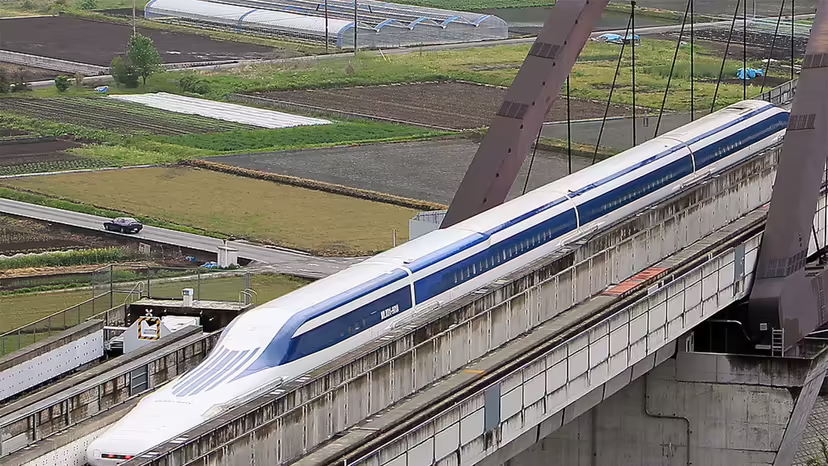
2502) Maglev Train
Gist
Maglev (magnetic levitation) trains are high-speed vehicles that use electromagnetic forces to float, guide, and propel themselves 10 cm (approx. 4 inches) above a guideway instead of using wheels, axles, or traditional engines. By eliminating friction, they achieve speeds exceeding 600 km/h (373 mph), offering a quiet, low-maintenance, and energy-efficient alternative to traditional rail.
Maglev trains are significantly faster than traditional bullet trains because they use magnetic levitation to float above the tracks, eliminating friction and allowing for much higher speeds, with operational speeds over 500 km/h compared to bullet trains' 320 km/h, and test records exceeding 600 km/h.
Summary
Maglev is a a floating vehicle for land transportation that is supported by either electromagnetic attraction or repulsion. Maglevs were conceptualized during the early 1900s by American professor and inventor Robert Goddard and French-born American engineer Emile Bachelet and have been in commercial use since 1984, with several operating at present and extensive networks proposed for the future.
Maglevs incorporate a basic fact about magnetic forces—like magnetic poles repel each other, and opposite magnetic poles attract each other—to lift, propel, and guide a vehicle over a track (or guideway). Maglev propulsion and levitation may involve the use of superconducting materials, electromagnets, diamagnets, and rare-earth magnets.
Electromagnetic suspension (EMS) and electrodynamic suspension (EDS)
Two types of maglevs are in service. Electromagnetic suspension (EMS) uses the attractive force between magnets present on the train’s sides and underside and on the guideway to levitate the train. A variation on EMS, called Transrapid, employs an electromagnet to lift the train off the guideway. The attraction from magnets present on the underside of the vehicle that wrap around the iron rails of the guideway keep the train about 1.3 cm (0.5 inch) above the guideway.
Electrodynamic suspension (EDS) systems are similar to EMS in several respects, but the magnets are used to repel the train from the guideway rather than attract them. These magnets are supercooled and superconducting and have the ability to conduct electricity for a short time after power has been cut. (In EMS systems a loss of power shuts down the electromagnets.) Also, unlike EMS, the charge of the magnetized coils of the guideway in EDS systems repels the charge of magnets on the undercarriage of the train so that it levitates higher (typically in the range of 1–10 cm [0.4–3.9 inches]) above the guideway. EDS trains are slow to lift off, so they have wheels that must be deployed below approximately 100 km (62 miles) per hour. Once levitated, however, the train is moved forward by propulsion provided by the guideway coils, which are constantly changing polarity owing to alternating electrical current that powers the system.
Maglevs eliminate a key source of friction—that of train wheels on the rails—although they must still overcome air resistance. This lack of friction means that they can reach higher speeds than conventional trains. At present maglev technology has produced trains that can travel in excess of 500 km (310 miles) per hour. This speed is twice as fast as a conventional commuter train and comparable to the TGV (Train à Grande Vitesse) in use in France, which travels between 300 and 320 km (186 and 199 miles) per hour. Because of air resistance, however, maglevs are only slightly more energy efficient than conventional trains.
Benefits and costs
Maglevs have several other advantages compared with conventional trains. They are less expensive to operate and maintain, because the absence of rolling friction means that parts do not wear out quickly (as do, for instance, the wheels on a conventional railcar). This means that fewer materials are consumed by the train’s operation, because parts do not constantly have to be replaced. The design of the maglev cars and railway makes derailment highly unlikely, and maglev railcars can be built wider than conventional railcars, offering more options for using the interior space and making them more comfortable to ride in. Maglevs produce little to no air pollution during operation, because no fuel is being burned, and the absence of friction makes the trains very quiet (both within and outside the cars) and provides a very smooth ride for passengers. Finally, maglev systems can operate on higher ascending grades (up to 10 percent) than traditional railroads (limited to about 4 percent or less), reducing the need to excavate tunnels or level the landscape to accommodate the tracks.
The greatest obstacle to the development of maglev systems is that they require entirely new infrastructure that cannot be integrated with existing railroads and that would also compete with existing highways, railroads, and air routes. Besides the costs of construction, one factor to be considered in developing maglev rail systems is that they require the use of rare-earth elements (scandium, yttrium, and 15 lanthanides), which may be quite expensive to recover and refine. Magnets made from rare-earth elements, however, produce a stronger magnetic field than ferrite (iron compounds) or alnico (alloys of iron, aluminum, nickel, cobalt, and copper) magnets to lift and guide the train cars over a guideway.
Maglev systems
Several train systems using maglev have been developed over the years, with most operating over relatively short distances. Between 1984 and 1995 the first commercial maglev system was developed in Great Britain as a shuttle between the Birmingham airport and a nearby rail station, some 600 meters (about 1,970 feet) away. Germany constructed a maglev in Berlin (the M-Bahn) that began operation in 1991 to overcome a gap in the city’s public transportation system caused by the Berlin Wall; however, the M-Bahn was dismantled in 1992, shortly after the wall was taken down. The 1986 World’s Fair (Expo 86) in Vancouver included a short section of a maglev system within the fairgrounds.
Six commercial maglev systems are currently in operation around the world. One is located in Japan, two in South Korea, and three in China. In Aichi, Japan, near Nagoya, a system built for the 2005 World’s Fair, the Linimo, is still in operation. It is about 9 km (5.6 miles) long, with nine station stops over that distance, and reaches speeds of about 100 km (62 miles) per hour. The Korean Rotem Maglev runs in the city of Taejeŏn between the Taejeŏn Expo Park and the National Science Museum, a distance of 1 km (0.6 mile). The Inch’ŏn Airport Maglev has six stations and runs from Inch’ŏn International Airport to the Yongyu station, 6.1 km (3.8 miles) away. The longest commercial maglev system is in Shanghai; it covers about 30 km (18.6 miles) and runs from downtown Shanghai to Pudong International Airport. The line is the first high-speed commercial maglev, operating at a maximum speed of 430 km (267 miles) per hour. China also has two low-speed maglev system operating at speeds of 100 km (62 miles) per hour. The Changsha Maglev connects that city’s airport to a station 18.5 km (11.5 miles) away, and the S1 line of the Beijing subway system has seven stops over a distance of 9 km (6 miles).
Japan has plans to create a long-distance high-speed maglev system, the Chuo Shinkansen, which would connect Nagoya to Tokyo, a distance of 286 km (178 miles), with an extension to Osaka (438 km [272 miles] from Tokyo) planned for 2037. However, the project was delayed past its original deadline in 2027 when the governor of Shizuoka Prefecture opposed the geological survey necessary to accommodate the high-speed train, citing impacts on biodiversity and water supply (though many surmised that it was because Shizuoka was the one prefecture with no station on the line). The governor’s resignation in 2024 effectively resumed the project, with new estimates placing the Nagoya-Tokyo line’s completion in 2034. The Chuo Shinkansen is planned to travel at 500 km (310 miles) per hour and make the Tokyo-Osaka trip in 67 minutes.
Details
Maglev (derived from magnetic levitation) is a system of rail transport whose rolling stock is levitated by electromagnets rather than rolled on wheels, eliminating rolling resistance.
Compared to conventional railways, maglev trains have higher top speeds, superior acceleration and deceleration, lower maintenance costs, improved gradient handling, and lower noise. However, they are more expensive to build, cannot use existing infrastructure, and use more energy at high speeds.
Maglev trains have set several speed records. The train speed record of 603 km/h (375 mph) was set by the experimental Japanese L0 Series maglev in 2015. From 2002 until 2021, the record for the highest operational speed of a passenger train of 431 kilometres per hour (268 mph) was held by the Shanghai maglev train, which uses German Transrapid technology. The service connects Shanghai Pudong International Airport and the outskirts of central Pudong, Shanghai. At its historical top speed, it covered the distance of 30.5 kilometres (19 mi) in just over 8 minutes (average speed: 228.75 km/h).
Different maglev systems achieve levitation in different ways, which broadly fall into two categories: electromagnetic suspension (EMS) and electrodynamic suspension (EDS). Propulsion is typically provided by a linear motor. The power needed for levitation is typically not a large percentage of the overall energy consumption of a high-speed maglev system. Instead, overcoming drag takes the most energy. Vactrain technology has been proposed as a means to overcome this limitation.
Despite over a century of research and development, there are only seven operational maglev trains today — four in China, two in South Korea, and one in Japan.
Two inter-city maglev lines are currently under construction, the Chūō Shinkansen connecting Tokyo and Nagoya (with further connection to Osaka) and a line between Changsha and Liuyang in Hunan Province, China.
Additional Information
The evolution of mass transportation has fundamentally shifted human civilization. In the 1860s, a transcontinental railroad turned the months-long slog across America into a week-long journey. Just a few decades later, passenger automobiles made it possible to bounce across the countryside much faster than on horseback. And of course, during the World War I era, the first commercial flights began transforming our travels all over again, making coast-to-coast journeys a matter of hours. But rail trips in the U.S. aren't much faster today than they were a century ago. For engineers looking for the next big breakthrough, perhaps "magical" floating trains are just the ticket.
In the 21st century there are a few countries using powerful electromagnets to develop high-speed trains, called maglev trains. These trains float over guideways using the basic principles of magnets to replace the old steel wheel and track trains. There's no rail friction to speak of, meaning these trains can hit speeds of hundreds of miles per hour.
Yet high speed is just one major benefit of maglev trains. Because the trains rarely (if ever) touch the track, there's far less noise and vibration than typical, earth-shaking trains. Less vibration and friction results in fewer mechanical breakdowns, meaning that maglev trains are less likely to encounter weather-related delays.
The first patents for magnetic levitation (maglev) technologies were filed by French-born American engineer Emile Bachelet all the way back in the early 1910s. Even before that, in 1904, American professor and inventor Robert Goddard had written a paper outlining the idea of maglev levitation [source: Witschge]. It wasn't long before engineers began planning train systems based on this futuristic vision. Soon, they believed, passengers would board magnetically propelled cars and zip from place to place at high speed, and without many of the maintenance and safety concerns of traditional railroads.
The big difference between a maglev train and a conventional train is that maglev trains do not have an engine — at least not the kind of engine used to pull typical train cars along steel tracks. The engine for maglev trains is rather inconspicuous. Instead of using fossil fuels, the magnetic field created by the electrified coils in the guideway walls and the track combine to propel the train.
If you've ever played with magnets, you know that opposite poles attract and like poles repel each other. This is the basic principle behind electromagnetic propulsion. Electromagnets are similar to other magnets in that they attract metal objects, but the magnetic pull is temporary. You can easily create a small electromagnet yourself by connecting the ends of a copper wire to the positive and negative ends of an AA, C or D-cell battery. This creates a small magnetic field. If you disconnect either end of the wire from the battery, the magnetic field is taken away.
The magnetic field created in this wire-and-battery experiment is the simple idea behind a maglev train rail system. There are three components to this system:
* A large electrical power source
* Metal coils lining a guideway or track
* Large guidance magnets attached to the underside of the train.
#432 This is Cool » Peregrine Falcon » 2026-02-22 17:08:07
- Jai Ganesh
- Replies: 0
Peregrine Falcon
Gist
As swift as a speeding arrow and more rapid than a cheetah, the peregrine falcon is the fastest member of the animal kingdom, with a diving speed of more than 200 miles per hour.
The Peregrine Falcon (Falco peregrinus) is the fastest bird, and indeed the fastest animal, in the world, reaching incredible speeds of over 320 km/h (200 mph) during its hunting dive, known as a stoop, with some recorded at nearly 390 km/h (242 mph). Its aerodynamic body and specialized nostrils allow it to achieve these speeds to catch prey mid-air.
Summary
Powerful and fast-flying, the Peregrine Falcon hunts medium-sized birds, dropping down on them from high above in a spectacular stoop. They were virtually eradicated from eastern North America by pesticide poisoning in the middle 20th century. After significant recovery efforts, Peregrine Falcons have made an incredible rebound and are now regularly seen in many large cities and coastal areas.
Cool Facts:
* People have trained falcons for hunting for over a thousand years, and the Peregrine Falcon was always one of the most prized birds. Efforts to breed the Peregrine in captivity and reestablish populations depleted during the DDT years were greatly assisted by the existence of methods of handling captive falcons developed by falconers.
* The Peregrine Falcon is a very fast flier, averaging 40-55 km/h (25-34 mph) in traveling flight, and reaching speeds up to 112 km/h (69 mph) in direct pursuit of prey. During its spectacular hunting stoop from heights of over 1 km (0.62 mi), the peregrine may reach speeds of 320 km/h (200 mph) as it drops toward its prey.
* The Peregrine Falcon is one of the most widespread birds in the world. It is found on all continents except Antarctica, and on many oceanic islands.
* The oldest recorded Peregrine Falcon was at least 19 years, 9 months old, when it was identified by its band in Minnesota in 2012, the same state where it had been banded in 1992.
Details
The peregrine falcon (Falco peregrinus), also referred to simply as the peregrine, is a bird of prey (raptor) in the family Falconidae known for its speed. A large, crow-sized falcon, it has a blue-grey back, barred white underparts and a black head. As is typical for bird-eating (avivore) raptors, peregrine falcons are sexually dimorphic, with females being considerably larger than males. Historically, the bird has also been known as the "black-cheeked falcon" in Australia, and the "duck hawk" in North America.
The breeding range includes land regions from the Arctic tundra to the tropics. It can be found nearly everywhere on Earth, except extreme polar regions, very high mountains, and most tropical rainforests. The only major ice-free landmass from which it is entirely absent is New Zealand. That makes it the world's most widespread raptor and one of the most widely found wild bird species. In fact, the only land-based bird species found over a larger geographic area, domestic and feral pigeons, owe their success to human-led introduction. Both are domesticated forms of the rock dove, and are a major prey species for peregrine populations. Due to their greater abundance in cities than most other birds, feral pigeons support many peregrine populations as a staple food source, especially in urban settings.
The peregrine is a highly successful example of urban wildlife in much of its range, taking advantage of tall buildings as nest sites, and an abundance of prey such as pigeons and ducks. Both the English and scientific names of the species mean "wandering falcon", referring to the migratory habits of many northern populations. A total of 18 or 19 regional subspecies are accepted, which vary in appearance. Disagreement existed in the past over whether the distinctive Barbary falcon was represented by two subspecies of Falco peregrinus or was a separate species, F. pelegrinoides, and several of the other subspecies were originally described as species. However, the difference in their appearance is very small, as is their genetic difference, being only about 0.6–0.8% genetically differentiated. That indicates the divergence is relatively recent, occurring during the Last Ice Age, and all major ornithological authorities now treat the Barbary falcon as a subspecies.
Although its diet consists almost exclusively of medium-sized birds, the peregrine will sometimes hunt small mammals, small reptiles, or even insects. Reaching sexual maturity at one year, it mates for life and nests in a scrape, normally on cliff edges or, in recent times, on tall human-made structures. The peregrine falcon became an endangered species in many areas because of the widespread use of various pesticides, especially DDT. Since the ban on DDT from the early 1970s, populations have recovered, supported by large-scale protection of nesting places and releases to the wild.
The peregrine falcon is a well-respected falconry bird due to its strong hunting ability, high trainability, versatility, and availability via captive breeding. It is effective on most game bird species, from small to large. It has also been used as a religious, royal, or national symbol across many eras and civilizations.
Description
The peregrine falcon has a body length of 34 to 58 cm (13–23 in) and a wingspan from 74 to 120 cm (29–47 in). The male and female have similar markings and plumage but, as with many birds of prey, the peregrine falcon displays marked sexual dimorphism in size, with the female measuring up to 30% larger than the male. Males weigh 330 to 1,000 g (12–35 oz) and the noticeably larger females weigh 700 to 1,500 g (25–53 oz). In most subspecies, males weigh less than 700 g (25 oz) and females weigh more than 800 g (28 oz), and cases of females weighing about 50% more than their male breeding mates are not uncommon. The standard linear measurements of peregrines are: the wing chord measures 26.5 to 39 cm (10.4–15.4 in), the tail measures 13 to 19 cm (5.1–7.5 in) and the tarsus measures 4.5 to 5.6 cm (1.8–2.2 in).
The back and the long pointed wings of the adult are usually bluish black to slate grey with indistinct darker barring; the wingtips are black. The white to rusty underparts are barred with thin clean bands of dark brown or black. The tail, coloured like the back but with thin clean bars, is long, narrow, and rounded at the end with a black tip and a white band at the very end. The top of the head and a "moustache" along the cheeks are black, contrasting sharply with the pale sides of the neck and white throat. The cere is yellow, as are the feet, and the beak and claws are black. The upper beak is notched near the tip, an adaptation which enables falcons to kill prey by severing the spinal column at the neck. An immature bird is much browner, with streaked, rather than barred, underparts, and has a pale bluish cere and orbital ring.
The patch of black feathers below the falcon's eyes is called the malar stripe. A 2021 study of photos from around the world showed that the malar stripe is larger in areas that receive more sunlight, and concluded that the stripe serves to improve the falcon's vision by reducing glare.
Additional Information
Peregrine falcon, (Falco peregrinus) is the most widely distributed species of bird of prey, with breeding populations on every continent except Antarctica and many oceanic islands. Sixteen subspecies are recognized. The peregrine falcon is best known for its diving speed during flight—which can reach more than 300 km (186 miles) per hour—making it not only the world’s fastest bird but also the world’s fastest animal.
Coloration is a bluish gray above, with black bars on the white to yellowish white underparts. Adult peregrines range from about 36 to 49 cm (14.2 to 19.3 inches) in length. Strong and fast, they hunt by flying high and then diving at their prey. Attaining tremendous speeds of more than 320 km (200 miles) per hour, they strike with clenched talons and kill by impact. Their prey includes ducks and a wide variety of songbirds and shorebirds. Peregrines inhabit rocky open country near water where birds are plentiful. The usual nest is a mere scrape on a ledge high on a cliff, but a few populations use city skyscrapers or tree nests built by other bird species. The clutch is three or four reddish brown eggs, and incubation lasts about a month. The young fledge in five to six weeks.
Captive peregrine falcons have long been used in the sport of falconry. After World War II the peregrine falcon suffered a precipitous population decline throughout most of its global range. In most regions, including North America, the chief cause of the decline was traced to the pesticide DDT, which the birds had obtained from their avian prey. The chemical had become concentrated in the peregrine’s tissues and interfered with the deposition of calcium in the eggshells, causing them to be abnormally thin and prone to breakage. In the British Isles, direct mortality from another pesticide, dieldrin, was the most important cause of the decline. Following the banning or great reduction in the use of most organochlorine pesticides, populations have rebounded in virtually every part of the world and now exceed historical levels in many regions.
The American peregrine falcon (F. peregrinus anatum), which once bred from Hudson Bay to the southern United States, was formerly an endangered species. It had completely vanished from the eastern United States and eastern boreal Canada by the late 1960s. After Canada had banned DDT use by 1969 and the United States by 1972, vigorous captive breeding and reintroduction programs were initiated in both countries. Over the next 30 years, more than 6,000 captive progeny were released to the wild. North American populations recovered completely, and since 1999 the peregrine has not been listed as endangered. The peregrine has been listed as a species of least concern by the International Union for Conservation of Nature (IUCN) since 2015.

#433 Science HQ » Tonsils » 2026-02-22 16:37:20
- Jai Ganesh
- Replies: 0
Tonsils
Gist
Tonsils are two oval-shaped, immune-system tissue pads located at the back of the throat that act as a first line of defense against ingested or inhaled pathogens. They commonly become inflamed (tonsillitis) due to viruses or bacteria, causing sore throat, swelling, and difficulty swallowing. Treatments include antibiotics for bacterial infections, rest, and sometimes surgical removal (tonsillectomy).
Causes of tonsil issues (tonsillitis) are primarily viral or bacterial infections, like the cold, flu, or strep throat, but can also involve tonsil stones (tonsilloliths) from trapped debris, or more rarely, tonsil cancer, linked to HPV, tobacco, and alcohol. Tonsils, as part of the immune system, often get inflamed fighting germs, especially in children, leading to symptoms like sore throat, fever, and difficulty swallowing.
(HPV: human papillomavirus)
Summary
The tonsils are a set of lymphoid organs facing into the aerodigestive tract, which is known as Waldeyer's tonsillar ring and consists of the adenoid tonsil (or pharyngeal tonsil), two tubal tonsils, two palatine tonsils, and the lingual tonsils. These organs play an important role in the immune system.
When used unqualified, the term most commonly refers specifically to the palatine tonsils, which are two lymphoid organs situated at either side of the back of the human throat. The palatine tonsils and the adenoid tonsil are organs consisting of lymphoepithelial tissue located near the oropharynx and nasopharynx (parts of the throat).
Function
Tonsils are key components of the immune system, acting as the body's first line of defense against inhaled or ingested pathogens. Located at the entrance of the respiratory and digestive tracts, they monitor and respond to microbes by initiating immune responses. The tonsils contain a dense network of immune cells including B lymphocytes, T lymphocytes, macrophages, and dendritic cells. These cells interact within specialized regions called germinal centers, which become especially active during infections. Within these centers, B cells undergo activation, class switching (changing the type of antibody they produce), and somatic hypermutation of their antibody genes to better recognize and neutralize pathogens. Tonsils have a unique lymphoepithelial structure, with immune cells embedded within epithelial tissue, creating a direct interface with the external environment. This architecture facilitates efficient sampling of incoming bacteria and viruses through specialized M cells in the epithelium. The crypts in palatine tonsils significantly increase the surface area for antigen sampling, enhancing immune surveillance. The tonsillar immune response produces various antibodies—particularly immunoglobulins like IgA, IgG, and IgM—which contribute to both local and systemic immunity. Secretory IgA is especially important as it provides mucosal protection against pathogens before they can establish infection. In essence, the tonsils serve as immune surveillance stations, training grounds for antibody-producing cells, and barriers against infection at the body's entry points.
Details
Your tonsils, located in the back of your throat, are part of your immune system. They help fight infection and disease. Sometimes, you can develop issues with your tonsils, such as pain, swelling and infection. If these issues are chronic, your healthcare provider might recommend a tonsillectomy (tonsil removal).
Overview:
What are tonsils?
Your tonsils are two round, fleshy masses in the back of your throat (pharynx). Part of your immune system, your tonsils are like lymph nodes. They help filter out germs that enter through your nose or mouth to protect the rest of your body from infection. Tonsils are also called palatine tonsils or faucial tonsils.
Sometimes tonsils can become red, swollen or infected. If this issue becomes chronic or doesn’t get better, your healthcare provider might recommend a tonsillectomy (tonsil removal). Typically, people who have their tonsils removed can still fight off infection without any problems. Your body can find other ways to combat germs.
Function:
What’s the purpose of tonsils?
The main function of tonsils is fighting infection. Your tonsils contain a lot of white blood cells, which help kill germs. As your tonsils are in the back of your throat, they can “catch” germs that enter your body through your nose or mouth.
Anatomy:
Where are your tonsils?
Your tonsils are near the back of your throat, just behind your soft palate. There are two of them — one on each side.
What do my tonsils look like?
If you still have your tonsils, you can see them when you open your mouth wide and look in the mirror. They’re oval-shaped, pinkish mounds of tissue located on each side of your throat.
What color are my tonsils?
Healthy, normal tonsils are pinkish in color. But your tonsils can appear red and swollen if they’re inflamed or infected.
How big are the average tonsils?
Tonsil size varies significantly from person to person. But based on one research study:
* The average overall tonsil size is 42.81 cubic centimeters (cu cm).
* The average tonsil size in women is 37.65 {cm}^{3}.
* The average tonsil size in men is 52.4 {cm}^{3}.
To put this into perspective, each of your tonsils is slightly larger than a marshmallow.
Conditions and Disorders:
What are some conditions that affect tonsils?
There are a few different conditions that can affect your tonsils. The most common is tonsillitis — an infection of the tonsils. Bacteria and viruses can cause tonsillitis, and the infection can be short-term (acute) or long-term (chronic). The most common tonsillitis symptoms include a sore throat and swollen tonsils.
Other conditions that can affect your tonsils include:
* Strep throat. Caused by a bacterium known as Streptococcus, strep throat can cause sore throat, neck pain and fever.
* Tonsil stones. Also called tonsilloliths, tonsil stones are small white or yellow lumps in your tonsils. They can lead to tonsil pain, bad breath or bad taste.
* Peritonsillar abscess. A pocket of infection that pushes your tonsil to the other side of your throat, a peritonsillar abscess can cause difficulty swallowing or breathing. (If this happens, contact your healthcare provider immediately. Prompt treatment is essential.)
* Mononucleosis. Caused by a herpes virus called Epstein-Barr, mononucleosis can result in swollen tonsils, sore throat, fatigue and skin rash.
* Enlarged (hypertrophic) tonsils. Larger-than-normal tonsils can block your airway, leading to snoring or sleep apnea.
* Tonsil cancer. The most common form of oropharyngeal cancer, tonsil cancer is often linked to the human papillomavirus (HPV). Symptoms include tonsil pain, a lump in your neck and blood in your saliva (spit).
Are there tests to check the health of my tonsils?
Yes. If your healthcare provider suspects an issue with your tonsils, they may recommend:
* A bacterial culture test. Your provider rubs a cotton swab on your throat and tonsils. Then, they send the sample to a lab for analysis. A throat culture can check for different bacterial infections, including tonsillitis, strep throat and pneumonia.
* Blood tests. If your provider thinks your tonsil pain is due to mononucleosis, they can request a monospot test. This blood test detects certain antibodies, which can help confirm your diagnosis. (If the monospot test comes back negative, they can check for Epstein-Barr antibodies in your blood. This can also help determine whether you have mononucleosis.)
Additional Information
The tonsils are part of the body’s immune system. Because of their location at the throat and palate, they can stop germs entering the body through the mouth or the nose. The tonsils also contain a lot of white blood cells, which are responsible for killing germs.
There are different types of tonsils:
* Palatine tonsils (tonsilla palatina)
* The adenoids (pharyngeal tonsil or tonsilla pharyngealis)
* Lingual tonsil (tonsilla lingualis)
The two palatine tonsils are found on the right and left of the back of the throat, and are the only tonsils that can be seen unaided when you open your mouth. The adenoids are found high up in the throat, behind the nose, and can only be seen through rhinoscopy (an examination of the inside of the nose). The lingual tonsil is located far back at the base of the tongue, on its back surface.
All of these tonsillar structures together are sometimes called Waldeyer's ring since they form a ring around the opening to the throat from the mouth and nose. This position allows them to prevent germs like viruses or bacteria from entering the body through the mouth or the nose. There are also more immune system cells located behind Waldeyer's ring on the sides of the throat. These cells can take on the function of the adenoids if they have been removed.
The palatine tonsils can become inflamed. Known as tonsillitis, this makes them swell up and turn very red. They often have yellowish spots on them as well. The most common symptoms are a sore throat and fever.
The palatine tonsils and the adenoids may become enlarged, especially in children. That makes it harder to breathe and causes sleep problems. Because of these problems, tonsil surgery is sometimes recommended.

#434 Re: Jai Ganesh's Puzzles » General Quiz » 2026-02-22 16:06:57
Hi,
#10761. What does the term in Geography Dam mean?
#10762. What does the term in Geography Dasymetric map mean?
#435 Re: Jai Ganesh's Puzzles » English language puzzles » 2026-02-22 15:43:34
Hi,
#5957. What does the adjective gratifying mean?
#5958. What does the adjective au gratin mean?
#436 Re: Jai Ganesh's Puzzles » Doc, Doc! » 2026-02-22 15:32:04
Hi,
#2575. What does the medical term Prostate cancer mean?
#437 Dark Discussions at Cafe Infinity » Come Quotes - XI » 2026-02-22 15:26:03
- Jai Ganesh
- Replies: 0
Come Quotes - XI
1. You cannot mandate philanthropy. It has to come from within, and when it does, it is deeply satisfying. - Azim Premji
2. Liberty has never come from Government. Liberty has always come from the subjects of it. The history of liberty is a history of limitations of governmental power, not the increase of it. - Woodrow Wilson
3. This is my 20th year in the sport. I've known swimming and that's it. I don't want to swim past age 30; if I continue after this Olympics, and come back in 2016, I'll be 31. I'm looking forward to being able to see the other side of the fence. - Michael Phelps
4. For many, Christmas is also a time for coming together. But for others, service will come first. - Queen Elizabeth II
5. Gliders, sail planes, they're wonderful flying machines. It's the closest you can come to being a bird. - Neil Armstrong
6. Change will come slowly, across generations, because old beliefs die hard even when demonstrably false. - E. O. Wilson
7. I come from - I came from Wales, and it's a strong, butch society. We were in the war and all that. People didn't waste time feeling sorry for themselves. You had to get on with it. So my credo is get on with it. I don't waste time being soft. I'm not cold, but I don't like being, wasting my time with - life's too short. - Anthony Hopkins
8. Author: A fool who, not content with having bored those who have lived with him, insists on tormenting generations to come. - Montesquieu.
#438 Jokes » Ice cream Jokes - III » 2026-02-22 15:13:53
- Jai Ganesh
- Replies: 0
Q: Why did the ice cream truck break down?
A: Because of the Rocky Road.
* * *
Q: How do you learn how to make ice cream?
A: In Sunday (Sundae) School.
* * *
Q: What happened when rockers couldn't get their favorite dessert?
A: Rage against the Broken Ice Cream Machine.
* * *
Who's there?
Ice cream!
Ice cream who?
Ice cream if you throw me in the cold, cold water!
* * *
There are two types of people in this world: People who love ice cream and liars.
* * *
#439 Re: Jai Ganesh's Puzzles » 10 second questions » 2026-02-22 14:51:08
Hi,
#9861.
#440 Re: Jai Ganesh's Puzzles » Oral puzzles » 2026-02-22 14:37:51
Hi,
#6355.
#441 Re: Exercises » Compute the solution: » 2026-02-22 14:26:39
Hi,
2715.
#442 Re: Jai Ganesh's Puzzles » General Quiz » 2026-02-22 00:33:51
Hi,
#10759. What does the term in Geography Cyclopean stairs mean?
#10760. What does the term in Geography Dale (landform) mean?
#443 Re: Jai Ganesh's Puzzles » English language puzzles » 2026-02-22 00:21:48
Hi,
#5955. What does the noun dereliction mean?
#5956. What does the verd (used with object) derive mean?
#444 Re: Jai Ganesh's Puzzles » Doc, Doc! » 2026-02-22 00:09:02
Hi,
#2574. What does the medical term Diphyllobothriasis mean?
#445 Dark Discussions at Cafe Infinity » Come Jokes - X » 2026-02-22 00:00:29
- Jai Ganesh
- Replies: 0
Come Jokes - X
1. The American People will come first once again. My plan will begin with safety at home - which means safe neighborhoods, secure borders, and protection from terrorism. There can be no prosperity without law and order. - Donald Trump
2. I don't give up. I'm a plodder. People come and go, but I stay the course. - Kevin Costner
3. I don't believe in pessimism. If something doesn't come up the way you want, forge ahead. If you think it's going to rain, it will. - Clint Eastwood
4. If you come to fame not understanding who you are, it will define who you are. - Oprah Winfrey
5. Change is never easy, and it often creates discord, but when people come together for the good of humanity and the Earth, we can accomplish great things. - David Suzuki
6. There is only one difference between a long life and a good dinner: that, in the dinner, the sweets come last. - Robert Louis Stevenson
7. I would like to tell the young men and women before me not to lose hope and courage. Success can only come to you by courageous devotion to the task lying in front of you. - C. V. Raman
8. I'm most comfortable with the Southern dialects, really. It's easy, for example, for me to do Irish because we've got Irish heritage where I come from. - Brad Pitt.
#446 Jokes » Ice cream Jokes - II » 2026-02-21 23:24:42
- Jai Ganesh
- Replies: 0
Q: When does Oliver Stone eat ice cream?
A: Any Given Sundae.
* * *
Q: Where is the best place to get an ice cream?
A: IN A SUNDAY SCHOOL.
* * *
Q: What do you call a rapper working at Cold Stone?
A: Scoop Dogg.
* * *
Q: What do you call a metalhead working at Cold Stone?
A: Alice Scooper.
* * *
Q: What did the newspaper say to the ice cream?
A: What's the scoop?
* * *
#447 Re: Jai Ganesh's Puzzles » 10 second questions » 2026-02-21 23:08:32
Hi,
#9860.
#448 Re: Jai Ganesh's Puzzles » Oral puzzles » 2026-02-21 22:56:16
Hi,
#6354.
#449 Re: Exercises » Compute the solution: » 2026-02-21 22:19:46
Hi,
2714.
#450 This is Cool » Tower Bridge, London » 2026-02-21 18:24:25
- Jai Ganesh
- Replies: 0
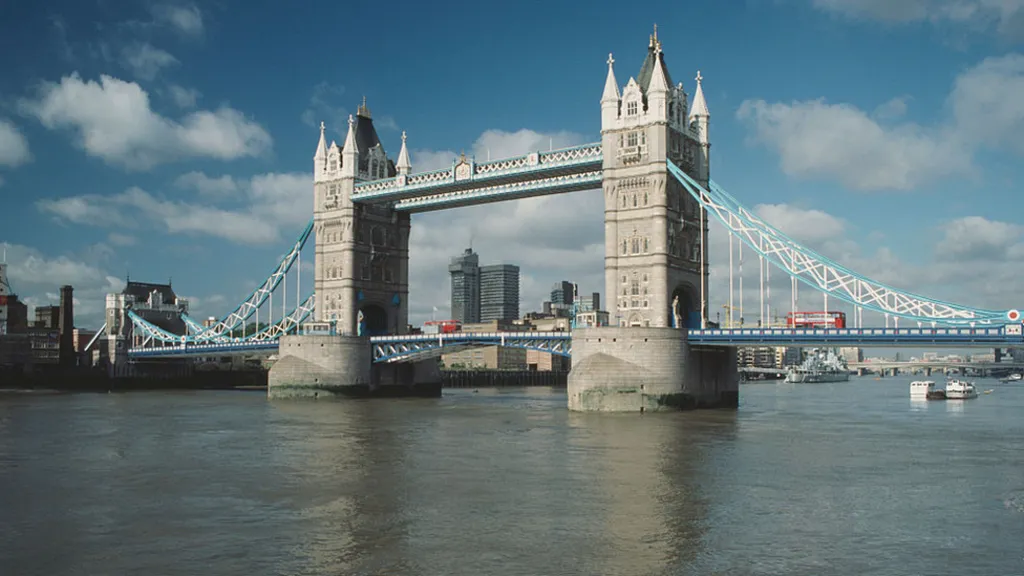
Tower Bridge
Gist
The modern concrete and steel structure we know today was opened to traffic in 1973. Tower Bridge, on the other hand, has never fallen down. It stands today as it was built in 1894. It is known as London's defining landmark - representing London as an iconic structure that is recognised the world-over.
Tower Bridge is one of the most iconic London attractions and it's also very easy to visit. You can walk across the bridge for free or for a slight fee you can walk up inside the bridge, take in the breathtaking skyline and walk across the glass bottom walkway.
Summary
Tower Bridge is a movable bridge of the double-leaf bascule (drawbridge) type that spans the River Thames between the Greater London boroughs of Tower Hamlets and Southwark. It is a distinct landmark that aesthetically complements the Tower of London, which it adjoins.
The bridge was completed in 1894. It is about 240 meters (800 feet) in length and provides an opening 76 meters (250 feet) wide. Its twin towers rise 61 meters (200 feet) above the Thames. Between the towers stretch a pair of glass-covered walkways that are popular among tourists. The walkways were originally designed to allow pedestrians to cross even while the bridge was raised, but they became hangouts for sex workers and thieves and so were closed from 1909 to 1982.
The Tower Bridge was operated by hydraulic pumps driven by steam until 1976, when electric motors were put into operation; the steam power system is still kept (in good repair) as a tourist display. Because of the reduction in shipping at the London Docklands, however, the leaves are raised less frequently. The modern bridge raises the leaves about 800 times a year, down from more than 6,000 times a year in 1894.
Details
Tower Bridge is a Grade I listed combined bascule, suspension, and, until 1960, cantilever bridge in London, built between 1886 and 1894, designed by Horace Jones and engineered by John Wolfe Barry with the help of Henry Marc Brunel. It crosses the River Thames close to the Tower of London and is one of five London bridges owned and maintained by the City Bridge Foundation, a charitable trust founded in 1282.
The bridge was constructed to connect the 39% of London's population that lived east of London Bridge, equivalent to the populations of "Manchester on the one side, and Liverpool on the other", while allowing shipping to access the Pool of London between the Tower of London and London Bridge. The bridge was opened by Edward, Prince of Wales, and Alexandra, Princess of Wales, on 30 June 1894.
The bridge is 940 feet (290 m) in length including the abutments and consists of two 213-foot (65 m) bridge towers connected at the upper level by two horizontal walkways, and a central pair of bascules that can open to allow shipping. Originally hydraulically powered, the operating mechanism was converted to an electro-hydraulic system in 1972. The bridge is part of the London Inner Ring Road and thus the boundary of the London congestion charge zone, and remains an important traffic route with 40,000 crossings every day. The bridge deck is freely accessible to both vehicles and pedestrians, whereas the bridge's twin towers, high-level walkways, and Victorian engine rooms form part of the Tower Bridge Exhibition.
Tower Bridge has become a recognisable London landmark. It is sometimes confused with London Bridge, about 0.5 miles (800 m) upstream, which has led to a persistent urban legend about an American purchasing the wrong bridge.
Touring the bridge
The Tower Bridge attraction is a display housed inside the bridge's towers, the high-level walkways, and the Victorian engine rooms. It uses films, photos, and interactive displays to explain why and how Tower Bridge was built. Visitors can access the original steam engines that once powered the bridge bascules, housed in Engine Rooms, underneath the south end of the bridge.
The attraction charges an admission fee. The entrance is from the ticket office on the west side of the North Tower, from where visitors can climb the stairs (or take a lift) to the high-level Walkways to cross to the South Tower. In the Towers and Walkways is interpretation about the history of the bridge. The Walkways also provide views over the city, the Tower of London and the Pool of London, and include two Glass Floors, where you can look down to see the road and River Thames below. From the South Tower, visitors can visit exit and follow the Blue Line to the Victorian Engine Rooms, with the original steam engines, which are situated in a separate building underneath the southern approach to the bridge.
Of the 1,114 English visitor attractions tracked by Visit England, in 2019 Tower Bridge had 889,338 visitors and was the 34th most visited attraction in England, and the 17th most visited attraction that charged an admission fee. It is one of only three bridges in England tracked as a visitor attraction alongside the Clifton Suspension Bridge in Bristol and The Iron Bridge in Shropshire.
Additional Information
Opened on 30 June 1894, Tower Bridge was built by and is owned and managed by the charity City Bridge Foundation - historically known as Bridge House Estates. It was founded around 900 years ago to maintain the old London Bridge, using income from bridge tolls, rents and bequests. Today, it owns and maintains Tower Bridge and London, Southwark, Millennium and Blackfriars bridges - at no cost to the taxpayer.
Tower Bridge was built to ease road traffic while maintaining river access to the busy Pool of London docks. Built with giant movable roadways that lift up for passing ships, it is to this day considered an engineering marvel and beyond being one of London’s favourite icons.