Math Is Fun Forum
You are not logged in.
- Topics: Active | Unanswered
- Index
- » This is Cool
- » Boiler
Pages: 1
#1 2026-02-22 22:51:20
- Jai Ganesh
- Administrator

- Registered: 2005-06-28
- Posts: 53,904
Boiler
Boiler
Gist
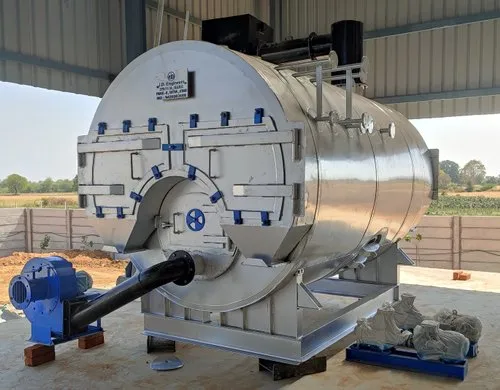
A boiler is a closed pressure vessel that heats water or other liquids to produce hot water or steam for heating, sanitation, or power generation. Utilizing energy sources like gas, oil, coal, or electricity, it acts as a heat exchanger, transferring heat from combustion to water. Key types include fire-tube (hot gases inside tubes) and water-tube (water inside tubes) boilers.
Boilers heat water to create steam or hot water for various applications, primarily for heating buildings (central heating, radiators) and driving industrial processes like power generation, cooking, sterilizing, and running turbines in factories, making them essential for both homes and large-scale manufacturing. They convert fuel (gas, oil, coal, biomass) or electricity into thermal energy for these diverse needs, from simple domestic hot water to complex pharmaceutical production.
Summary
A boiler is an enclosed vessel that provides a means for combustion and transfers heat to water until it becomes hot water or steam. The hot water or steam under pressure is then usable for transferring the heat to a process.
Water is useful and cheap medium for transferring heat to a process. When water is boiled into steam its volume increases about 1,600 times, producing a force that is almost as explosive as gunpowder. This causes the boiler to be extremely dangerous equipment and should be treated carefully.
Liquid when heated up to the gaseous state this process is called evaporation.
The heating surface is any part of the boiler; hot gases of combustion are on one side and water on the other. Any part of the boiler metal that actually contributes to making steam is heating surface. The amount of heating surface of a boiler is expressed in square meters. The larger the heating surface a boiler has, the more efficient it becomes.
The boiler system is made up of :
1. Feed water system
2. Steam system
3. Fuel system
The feed water system provides water to the boiler and regulates it automatically to meet the steam demand. The water supplied to boiler that is converted to steam is called feed water. The sources of feed water are:
1. Condensate or condensed steam returned from the processes
2. Makeup water which is the raw water which must come from outside the boiler room and plant processes.
The steam system collects and controls the steam produced in the boiler. Steam is directed through a piping system to the point of use. Throughout the system, steam pressure is regulated using valves and checked with steam pressure gauges.
The fuel system includes all equipment used to provide fuel to generate the necessary heat. The equipments required in the fuel system depend on the type of fuel used in the system.
Details
A boiler is a closed vessel in which fluid (generally water) is heated. The fluid does not necessarily boil. The heated or vaporized fluid exits the boiler for use in various processes or heating applications, including water heating, central heating, boiler-based power generation, cooking, and sanitation.
Heat sources
In a fossil fuel power plant using a steam cycle for power generation, the primary heat source will be combustion of coal, oil, or natural gas. In some cases byproduct fuel such as the carbon monoxide rich offgasses of a coke battery can be burned to heat a boiler; biofuels such as bagasse, where economically available, can also be used. In a nuclear power plant, boilers called steam generators are heated by the heat produced by nuclear fission. Where a large volume of hot gas is available from some process, a heat recovery steam generator or recovery boiler can use the heat to produce steam, with little or no extra fuel consumed; such a configuration is common in a combined cycle power plant where a gas turbine and a steam boiler are used. In all cases the combustion product waste gases are separate from the working fluid of the steam cycle, making these systems examples of external combustion engines.
Materials
The pressure vessel of a boiler is usually made of steel (or alloy steel), or historically of wrought iron. Stainless steel, especially of the austenitic types, is not used in wetted parts of boilers due to corrosion and stress corrosion cracking. However, ferritic stainless steel is often used in superheater sections that will not be exposed to boiling water, and electrically heated stainless steel shell boilers are allowed under the European "Pressure Equipment Directive" for production of steam for sterilizers and disinfectors.
In live steam models, copper or brass is often used because it is more easily fabricated in smaller size boilers. Historically, copper was often used for fireboxes (particularly for steam locomotives), because of its better formability and higher thermal conductivity; however, in more recent times, the high price of copper often makes this an uneconomic choice and cheaper substitutes (such as steel) are used instead.
For much of the Victorian "age of steam", the only material used for boilermaking was the highest grade of wrought iron, with assembly by riveting. This iron was often obtained from specialist ironworks, such as those in the Cleator Moor (UK) area, noted for the high quality of their rolled plate, which was especially suitable for use in critical applications such as high-pressure boilers. In the 20th century, design practice moved towards the use of steel, with welded construction, which is stronger and cheaper, and can be fabricated more quickly and with less labour. Wrought iron boilers corrode far more slowly than their modern-day steel counterparts, and are less susceptible to localized pitting and stress-corrosion. That makes the longevity of older wrought-iron boilers far superior to that of welded steel boilers.
Cast iron may be used for the heating vessel of domestic water heaters. Although such heaters are usually termed "boilers" in some countries, their purpose is usually to produce hot water, not steam, and so they run at low pressure and try to avoid boiling. The brittleness of cast iron makes it impractical for high-pressure steam boilers.
Energy
The source of heat for a boiler is combustion of any of several fuels, such as wood, coal, oil, or natural gas. Electric steam boilers use resistance- or immersion-type heating elements. Nuclear fission is also used as a heat source for generating steam, either directly (BWR) or, in most cases, in specialised heat exchangers called "steam generators" (PWR). Heat recovery steam generators (HRSGs) use the heat rejected from other processes such as gas turbine.
PWR : Pressurized Water Reactor.
BWR : Boiling Water Reactor.
HRGS : Heat Recovery Steam Generators.
Additional Information:
What is a Boiler?
A pressure vessel that provides a heat transfer surface (generally a set of tubes) between the combustion products and the water. A boiler is usually integrated into a system with many components.
Why use a Boiler?
Boilers are used to produce steam. The generation part of a steam system uses a boiler to add energy to a feedwater supply to generate steam. The energy is released from the combustion of fossil fuels or from process waste heat.
Where are Boilers Used?
Anywhere you are creating heat and/or steam, you will probably find a boiler. ABMA (American Boilers Manufacturers Association) members produce large boilers for the commercial, industrial, utility sector and more. Boiler systems are used to create pulp & paper, generate electricity and process foods. The complexity significantly increases as you increase the size and need for greater performance of the boiler system.
What are the major components of the Boiler System?
The boiler itself is a main component of a generation system that also includes the fuel supply, combustion air system, feedwater system, and exhaust gases venting system. ABMA members also manufacture the following components.
* Burner
* Controls
* Deaerator
* Economizer
* Fan
* Heat Exchanger
* Instrumentation
* Stoker
* Tubes
What are the basic types of Boilers?
There are two basic types of boilers: firetube and watertube. The fundamental difference between these boiler types is which side of the boiler tubes contain the combustion gases or the boiler water/steam.
Firetube Boiler
In firetube boilers, the combustion gases pass inside boiler tubes, and heat is transferred to water between the tubes and the outer shell. Today, larger firetube boilers are over 1,500 boiler horsepower (about 50,000 pounds per hour. Firetube boilers are often characterized by their number of passes, referring to the number of times the combustion (or flue) gases flow the length of the pressure vessel as they transfer heat to the water. The turnaround zones can be either dryback or waterback. In dryback designs, the turnaround area is refractory-lined. In waterback designs, this turnaround zone is water-cooled, eliminating the need for the refractory lining.
Watertube Boiler
In watertube boilers, boiler water passes through the tubes while the exhaust gases remain in the shell side, passing over the tube surfaces. Because tubes can typically withstand higher internal pressure than the large chamber shell in a firetube, watertube boilers are used where high steam pressures (3,000 psi, sometimes higher) are required. Watertube boilers are also capable of high efficiencies and can generate saturated or superheated steam. In fact, the ability of watertube boilers to generate superheated steam makes these boilers particularly attractive in applications that require dry, high-pressure, high energy steam, including steam turbine power generation. The performance characteristics of watertube boilers make them highly favorable in process industries, including chemical manufacturing, pulp and paper manufacturing, and refining. Although firetube boilers account for the majority of boiler sales in terms of units, watertube boilers account for the majority of boiler capacity.
Waste Heat Recovery Boiler (WHRB)
These boilers may be either firetube or watertube design and use heat that would otherwise be discarded to generate steam. Typical sources of heat for WHRBs include exhaust gases or high-temperature products from an external manufacturing process in refineries and chemical manufacturing facilities, or combustion of a waste fuel in the boiler furnace.
Heat Recovery Steam Generators (HRSGs)
HRSGs transfer energy from the exhaust of a gas turbine to an unfired or supplementary fired heat-recovery steam generator to produce steam. Exhaust gases leave the gas turbine at temperatures of 1,000°F (538°C) or higher and can represent more than 75% of the total fuel energy input. This energy can be recovered by passing the gases through a heat exchanger (steam generator) to produce hot water or steam for process needs.
It appears to me that if one wants to make progress in mathematics, one should study the masters and not the pupils. - Niels Henrik Abel.
Nothing is better than reading and gaining more and more knowledge - Stephen William Hawking.
Offline
Pages: 1
- Index
- » This is Cool
- » Boiler