Math Is Fun Forum
You are not logged in.
- Topics: Active | Unanswered
Pages: 1
#1 2026-01-04 20:46:56
- Jai Ganesh
- Administrator

- Registered: 2005-06-28
- Posts: 52,809
Watch or Wrist watch
Watch or Wrist watch
Gist
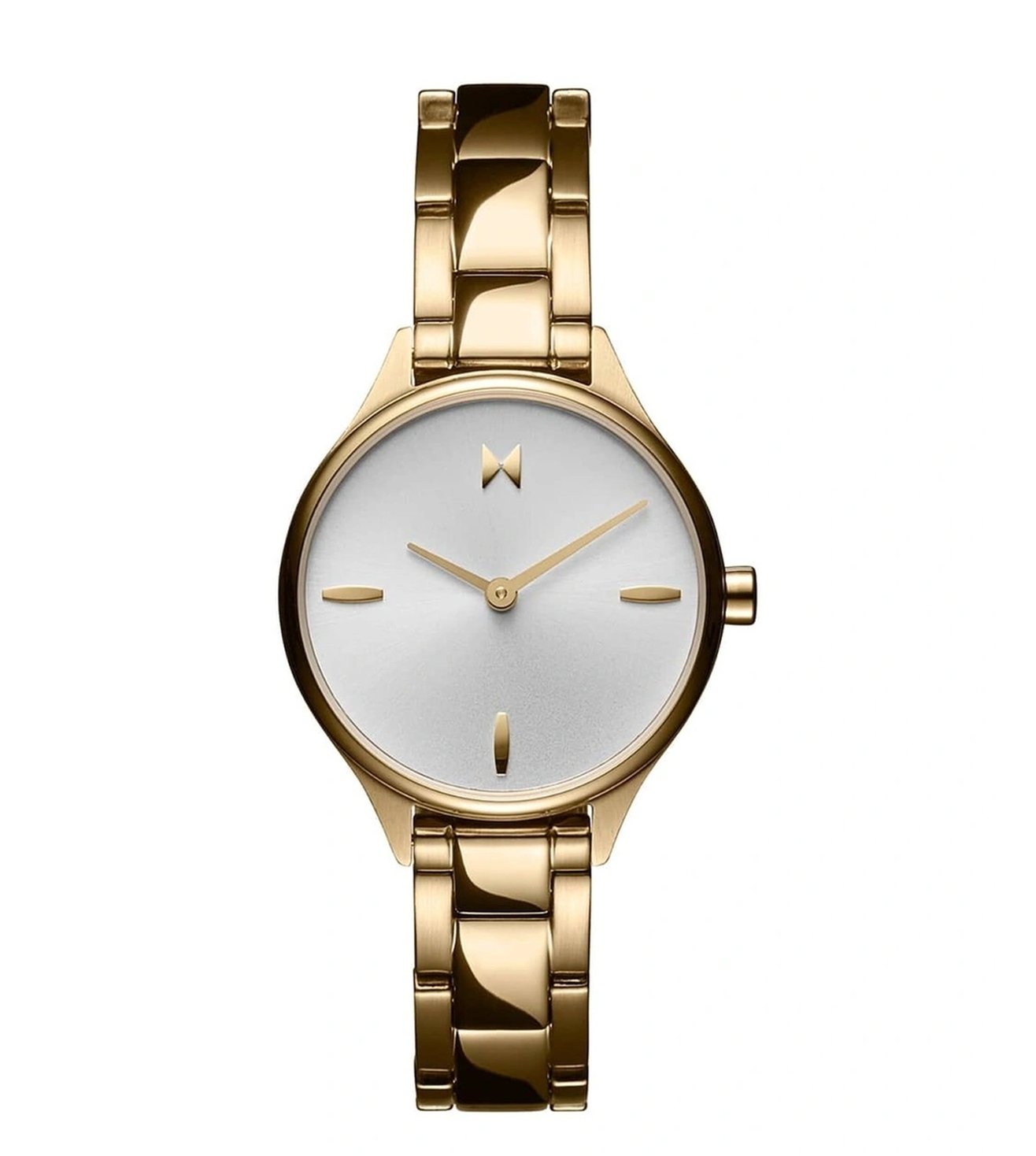
A wristwatch is worn around the wrist, attached by a watch strap or another type of bracelet, including metal bands or leather straps. A pocket watch is carried in a pocket, often attached to a chain.
The "best" watch depends on your needs: Quartz for accuracy & low cost, Automatic for craftsmanship & tradition, and Smartwatches for tech; choose styles like Field (rugged), Dress (formal), or Chronograph (multi-function) based on lifestyle, ensuring it fits your wrist and reflects your personality. There's no single best, but rather the best for you, balancing convenience, style, and purpose.
Summary
A watch is a timepiece carried or worn by a person. It is designed to maintain a consistent movement despite the motions caused by the person's activities. A wristwatch is worn around the wrist, attached by a watch strap or another type of bracelet, including metal bands or leather straps. A pocket watch is carried in a pocket, often attached to a chain. A stopwatch is a type of watch that measures intervals of time.
During most of their history, beginning in the 16th century, watches were mechanical devices, driven by clockwork, powered by winding a mainspring, and keeping time with an oscillating balance wheel. These are known as mechanical watches. In the 1960s the electronic quartz watch was invented, powered by a battery and keeping time with a vibrating quartz crystal. By the 1980s it had taken over most of the watch market, in what became known as the quartz revolution (or the quartz crisis in Switzerland, whose renowned watch industry it decimated). In the 2010s, smartwatches emerged, small wrist-worn computers with touchscreens and with functions that go far beyond timekeeping.
Modern watches often display the day, date, month, and year. Mechanical watches may have extra features ("complications") such as moon-phase displays and different types of tourbillon. Quartz watches often include timers, chronographs, and alarm functions. Smartwatches and more complicated electronic watches may even incorporate calculators, GPS and Bluetooth technology or have heart-rate monitoring capabilities, and some use radio clock technology to regularly correct the time.
Most watches used mainly for timekeeping have quartz movements. But expensive collectible watches, valued more for their elaborate craftsmanship, aesthetic appeal, and glamorous design than for timekeeping, often have traditional mechanical movements, despite being less accurate and more expensive than their electronic counterparts. As of 2019, the most expensive watch ever sold at auction was the Patek Philippe Grandmaster Chime for US$31.2 million.
Details
A watch is a portable timepiece that has a movement driven either by spring or by electricity and that is designed to be worn or carried in the pocket.
Mechanical watches
The first watches appeared shortly after 1500, early examples being made by Peter Henlein, a locksmith in Nürnberg, Ger. The escapement used in the early watches was the same as that used in the early clocks, the verge. Early watches were made notably in Germany and at Blois in France, among other countries, and were generally carried in the hand or worn on a chain around the neck. They usually had only one hand for the hours.
The mainspring, the element that drives the watch, consists of a flat spring-steel band stressed in bending or coiling; when the watch, or other spring-driven mechanism, is wound, the curvature of the spring is increased, and energy is thus stored. This energy is transmitted to the oscillating section of the watch (called the balance) by the wheeltrain and escapement, the motion of the balance itself controlling the release of the escapement and consequently the timing of the watch. A friction drive permits the hand to be set.
One of the main defects of the early watches was the variation in the torque exerted by the mainspring; that is, the force of the mainspring was greater when fully wound than when it was almost run down. Since the timekeeping of a watch fitted with a verge escapement was greatly influenced by the force driving it, this problem was quite serious. Solution of the problem was advanced almost as soon as the mainspring was invented (about 1450) by the application of the fusee, a cone-shaped, grooved pulley used together with a barrel containing the mainspring. With this arrangement, the mainspring was made to rotate a barrel in which it was housed; a length of catgut, later replaced by a chain, was wound on it, the other end being coiled around the fusee. When the mainspring was fully wound, the gut or chain pulled on the smallest radius of the cone-shaped fusee; as the mainspring ran down, the leverage was progressively increased as the gut or chain pulled on a larger radius. With correct proportioning of mainspring and fusee radii, an almost constant torque was maintained as the mainspring unwound.
The going barrel, in which the mainspring barrel drives the wheeltrain directly, is fitted to all modern mechanical watches and has superseded the fusee. With better quality mainsprings, torque variations have been reduced to a minimum, and with a properly adjusted balance and balance spring, good timekeeping is ensured.
Up to about 1580, the mechanisms of German watches were made almost wholly of iron; about this time, brass was introduced.
In the earliest watches a plain wheel, known as the balance, was used to control the rate of going of the mechanism. It was subjected to no consistent restoring force; consequently, its period of oscillation and, hence, the rate of the timekeeper were dependent on the driving force. This explains the great importance of the fusee.
Controlling the oscillations of a balance with a spring was an important step in the history of timekeeping. English physicist Robert Hooke designed a watch with a balance spring in the late 1650s; there appears to be no evidence, however, that the spring was in the form of a spiral, a crucial element that would become widely employed. Dutch scientist Christiaan Huygens was probably the first to design (1674–75) a watch with a spiral balance spring. The balance spring is a delicate ribbon of steel or other suitable spring material, generally wound into a spiral form. The inner end is pinned into a collet (a small collar), which fits friction-tight on the balance staff, while the outer end is held in a stud fixed to the movement. This spring acts on the balance as gravity does on the pendulum. If the balance is displaced to one side, the spring is wound and energy stored in it; this energy is then restored to the balance, causing it to swing nearly the same distance to the other side if the balance is released.
If there were no frictional losses (e.g., air friction, internal friction in the spring material, and friction at the pivots), the balance would swing precisely the same distance to the other side and continue to oscillate indefinitely; because of these losses, however, the oscillations in practice die away. It is the energy stored in the mainspring and fed to the balance through the wheel train and escapement that maintains the oscillations.
The performance of the modern watch depends on the uniformity of the period of oscillation of the balance—i.e., the regularity of its movement. The balance takes the form of a wheel with a heavy rim, while the spring coupled to it provides the restoring torque. The balance possesses inertia, dependent on its mass and configuration. The spring should ideally provide a restoring force directly proportional to the displacement from its unstressed or zero position.
The balance is mounted on a staff with pivots, and, in watches of good quality, these run in jewels. Two jewels are used at each end of the balance staff, one pierced to provide a bearing, the other a flat end stone providing axial location by bearing against the domed end of the pivot. Frictional effects at the pivots influence the performance of the watch in various positions—for example, lying and hanging.
The balance and spring can be brought to time, or “regulated,” by varying either the restoring couple provided by the spring or the moment of inertia of the balance. In the first case (by far the more common), this is generally effected by providing a pair of curb pins mounted on a movable regulator index that lengthen or shorten the balance spring as needed.
In the second instance, screws are provided at opposite points on the rim of the balance; these screws are friction-tight in their holes and thus can be moved in or out so as to adjust the inertia of the balance. In “free-sprung” watches no regulator index is provided, and the only adjusters are the screws on the balance rim.
Many modern mechanical watches use a lever escapement, invented in England about 1755 by Thomas Mudge, that leaves the balance free to oscillate, coupling to it only while delivering the impulse, taken from the mainspring via the wheel train and while being unlocked by the balance. It was developed into its modern form with the club-tooth escape wheel at the beginning of the 19th century but was not universally adopted until the early 20th century. In good-quality watches the club-tooth escape wheel is made of hardened steel, with the acting surfaces ground and polished. An improved form of the lever escapement is characterized by a double-roller safety action in which the intersection between the guard pin and roller, which takes place underneath the roller, is much deeper than in early single-roller watches; thus, any friction caused by jolts encountered in wear causes less constraint on the balance and less endangerment of the timekeeping properties of the watch. By far the most important watch escapement today is the lever escapement; it is used in its jeweled form in watches of moderate to excellent quality, and it is used with steel pallet pins and a simplified fork-and-roller action in cheaper watches (known as pin-pallet watches).
In the wheel train of a modern watch, it is necessary to achieve a step-up ratio of approximately 1 to 4,000 between barrel and escape wheel. This involves four pairs of gears, the ratio per pair commonly being between 6 to 1 and 10 to 1. Because of space considerations, the pinions must have a low number of leaves (teeth), commonly 6 to 12. This entails a number of special gearing problems, aggravated by the fineness of the pitch. Any error in centre distance, form, or concentricity is therefore proportionately more important than in larger gear trains.
The first patent covering the application of jewels in watches was taken out in London in 1704; diamonds and sapphires were used. Synthetic jewels made from fused powdered alumina (aluminum oxide) are now commonly used. Watch jewels are given a very high polish; a uniform outside diameter for the jewel bearings is highly important, because they are pressed into accurately sized holes smaller than the jewels themselves and held there by friction.
The first patent on the self-winding pocket watch was taken out in London in 1780. An English invention patented in 1924, the self-winding wristwatch by Louis Recordon, contains a swinging weight pivoted at the centre of the movement, coupled to the barrel arbor through reduction wheels and gears. A more modern self-winding watch is fitted with a weight or rotor swinging 360 degrees and winding in both directions.
Electric-powered and electronic watches
Electric-powered watches use one of three drive systems: (1) the galvanometer drive, consisting of the conventional balance-hairspring oscillator, kept in motion by the magnetic interaction of a coil and a permanent magnet, (2) the induction drive, in which an electromagnet attracts a balance containing soft magnetic material, or (3) the resonance drive, in which a tiny tuning fork (about 25 mm [1 inch] in length), driven electrically, provides the motive power. Both galvanometer and induction drive types use a mechanical contact, actuated by the balance motion, to provide properly timed electric-drive pulses. Each oscillation of the balance operates a time-indicating gear train by advancing a toothed wheel one tooth. First produced in 1953, the resonance drive type, properly called an electronic watch, is inherently more accurate since it operates at a frequency higher than that customarily used with balance-type watches, and the tuning fork is a fairly stable source of frequency. The higher frequency requires the replacement of a mechanical contact by a transistor. The minute and rapid motion of the tuning fork moves forward an extremely fine-toothed ratchet wheel. There is very little friction in the electronic watch; only tiny amounts of oil are needed. When the battery is too weak to operate the tuning fork, the watch simply stops, without deterioration. Miniature high-energy-density batteries are used as power sources in all three types.
The progressive miniaturization of electronic components in the late 20th century made possible the development of all-electronic watches, in which the necessary transistors, resistors, capacitors, and other elements were all on one or several miniature integrated circuits, or chips. The complex circuitry of such watches enabled them to perform a variety of timekeeping functions and also made possible digital readouts of the time in place of the traditional second, minute, and hour hands.
Additional Information
A wristwatch is a small, portable timepiece worn on the wrist, attached by a strap or bracelet, designed to keep consistent time despite a person's movements. Functioning as both a practical tool for telling time and a fashion accessory, wristwatches range from traditional mechanical or quartz models to modern smartwatches with advanced digital capabilities like fitness tracking and smartphone connectivity.
Wearing a watch offers benefits beyond just telling time, including improved time management, self-expression through style, a break from phone distractions, increased confidence, and the potential for sentimental value as a keepsake or heirloom, while also acting as a functional tool for fitness or notifications, especially with smartwatches.
It appears to me that if one wants to make progress in mathematics, one should study the masters and not the pupils. - Niels Henrik Abel.
Nothing is better than reading and gaining more and more knowledge - Stephen William Hawking.
Offline
Pages: 1