Math Is Fun Forum
You are not logged in.
- Topics: Active | Unanswered
Pages: 1
#1 2026-01-03 21:29:07
- Jai Ganesh
- Administrator

- Registered: 2005-06-28
- Posts: 53,903
Root canal treatment
Root canal treatment
Gist
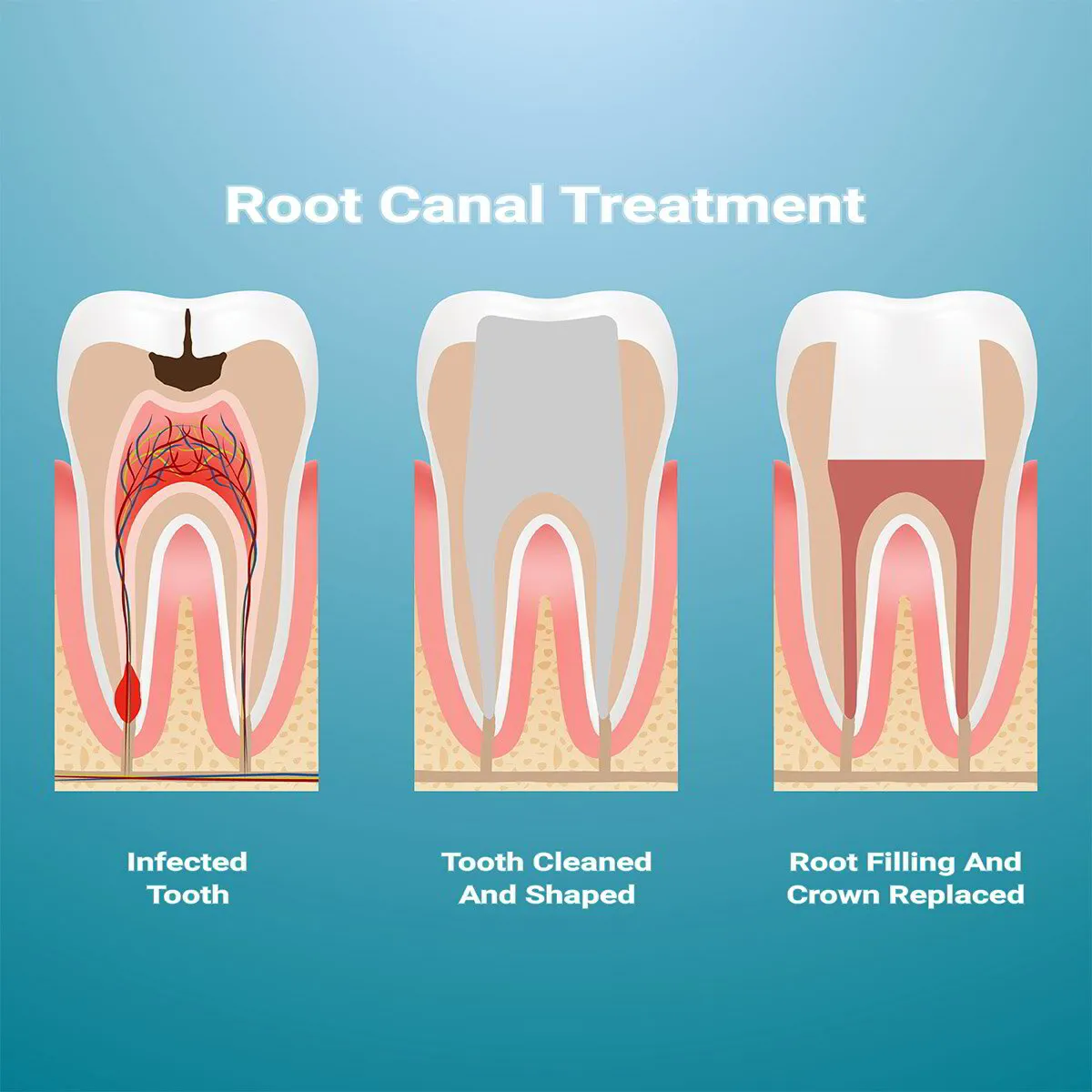
A root canal treatment (RCT) saves a damaged or infected tooth by removing its inflamed/dead pulp (nerves, tissue), cleaning and disinfecting the inside, and then filling and sealing it to prevent future infection, relieving pain and preserving the natural tooth instead of extracting it. The procedure involves numbing the area, drilling access, cleaning the canals with files, filling with gutta-percha, and sealing with a temporary/permanent filling or crown, often in one or two visits.
How quick is root canal recovery?
Once the root canal procedure is over, recovery time typically takes less than a week. You might experience a little bit of mild discomfort for a few days. You may eat after a root canal, but it's recommended that you wait until the numbness wears off.
Summary
Root canal treatment (also known as endodontic therapy, endodontic treatment, or root canal therapy) is a treatment sequence for the infected pulp of a tooth that is intended to result in the elimination of infection and the protection of the decontaminated tooth from future microbial invasion. It is generally done when the cavity is too big for a normal filling. Root canals, and their associated pulp chamber, are the physical hollows within a tooth that are naturally inhabited by nerve tissue, blood vessels and other cellular entities.
Endodontic therapy involves the removal of these structures, disinfection and the subsequent shaping, cleaning, and decontamination of the hollows with small files and irrigating solutions, and the obturation (filling) of the decontaminated canals. Filling of the cleaned and decontaminated canals is done with an inert filling such as gutta-percha and typically a zinc oxide eugenol-based cement. Epoxy resin is employed to bind gutta-percha in some root canal procedures. In the past, in the discredited Sargenti method, an antiseptic filling material containing paraformaldehyde like N2 was used. Endodontics includes both primary and secondary endodontic treatments as well as periradicular surgery which is generally used for teeth that still have potential for salvage.
Details
A root canal clears infection from inside your tooth’s pulp, often resulting from deep cavities or cracks. If you notice pain, swelling or a boil on your gums, it could be time to see your dentist. Root canals are common and help save your natural tooth.
What is a root canal?
A root canal is a procedure that removes infected pulp from inside your tooth. Your dentist cleans and seals the canals to prevent further damage and save your tooth. You might need root canal treatment if bacteria reach the pulp and cause pain or inflammation.
This can happen if:
* You have a deep cavity
* You crack a tooth
Root canals are common. Good oral hygiene can help you avoid needing one.
How do I know if I need this procedure?
You might not notice an infected tooth at first, but root canal symptoms might include:
* A pimple or boil on your gums that may ooze pus
* A swollen jaw from a trapped infection
* Darkened tooth color
* Loose tooth from infection weakening nearby bone
* Pain that spreads to your jaw, face or nearby teeth
* Pain when chewing or touching the tooth
* Tender or swollen gums
If you have root canal pain, don’t wait. Treatment can relieve pain, save your tooth and prevent the infection from spreading. Your dentist can help you decide if it’s the right option for you.
Procedure Details:
How should I prepare for root canal treatment?
Before treatment, your provider will examine your tooth with X-rays and other tests to confirm the infection. They may:
* Ask if it hurts when you bite down
* Check for swelling in your gums or bone
* Gently tap your tooth or apply hot/cold to check sensitivity
* Use an electric pulp test (EPT) to see if the pulp is alive
What happens during a root canal procedure?
Your dentist or endodontist will:
* Numb the area with anesthesia (if you’re nervous, you may get medication to help you relax, and you might be drowsy after)
* Place cotton or a dental dam to keep the area clean and dry during the procedure
* Create a small hole in your tooth’s crown to reach the pulp
* Remove the infected pulp using tiny tools
* Clean and disinfect the inside of the tooth
* Fill the empty space with a rubbery dental material (gutta-percha)
* Seal the tooth with a temporary filling
* Place a permanent crown (usually at a later visit) to protect your tooth and restore your bite
Most root canals take about 60 to 90 minutes. Some may require more than one visit.
What happens after root canal treatment?
You’ll rest briefly in the office after your procedure. You’ll likely have two more appointments: one to prepare for your crown and one to place it.
Additional Information
A root canal treatment is a dental procedure to remove inflamed or infected pulp on the inside of the tooth which is then carefully cleaned and disinfected, then filled and sealed. Root canal treatment is designed to eliminate bacteria from the infected root canal, prevent reinfection of the tooth and save the natural tooth.
There's no need to be worried if your dentist or endodontist prescribes a root canal procedure to treat a damaged or diseased tooth. Millions of teeth are treated and saved this way each year, relieving pain and making teeth healthy again.
Inside your tooth, beneath the white enamel and a hard layer called dentin, is a soft tissue called pulp. This tissue contains blood vessels, nerves and connective tissue, which help grow the root of your tooth during its development. A fully developed tooth can survive without the pulp because the tooth continues to be nourished by the tissues surrounding it.
A modern root canal treatment is nothing like those old sayings! It's very similar to a routine filling and can usually be completed in one or two appointments, depending on the condition of your tooth and your personal circumstances. Getting a root canal is relatively painless and extremely effective. You'll be back to smiling, biting and chewing with ease in no time.
Saving the natural tooth with root canal treatment has many advantages:
* Efficient chewing
* Normal biting force and sensation
* Natural appearance
* Protects other teeth from excessive wear or strain.
It appears to me that if one wants to make progress in mathematics, one should study the masters and not the pupils. - Niels Henrik Abel.
Nothing is better than reading and gaining more and more knowledge - Stephen William Hawking.
Offline
Pages: 1