Math Is Fun Forum
You are not logged in.
- Topics: Active | Unanswered
Pages: 1
#1 2026-03-19 17:42:21
- Jai Ganesh
- Administrator

- Registered: 2005-06-28
- Posts: 53,833
Dislocation
Dislocation
Gist
A joint dislocation is a traumatic injury where bones are forced out of their normal position, often caused by falls, sports, or accidents. Symptoms include severe pain, visible deformity, swelling, and inability to move the joint. Treatment involves immediate medical reduction, immobilization, and rehab, taking several weeks to heal.
A dislocation is the displacement of bones from their normal positions within a joint, typically caused by trauma, or a general disruption of established order. It results in severe pain, deformity, and limited movement. Synonyms include displacement, disruption, separation, misalignment, and luxation.
Summary
A joint dislocation, also called luxation, occurs when there is an abnormal separation in the joint, where two or more bones meet. A partial dislocation is referred to as a subluxation. Dislocations are commonly caused by sudden trauma to the joint like during a car accident or fall. A joint dislocation can damage the surrounding ligaments, tendons, muscles, and nerves. Dislocations can occur in any major joint (shoulder, knees, hips) or minor joint (toes, fingers). The most common joint dislocation is a shoulder dislocation.
The treatment for joint dislocation is usually by closed reduction, that is, skilled manipulation to return the bones to their normal position. Only trained medical professionals should perform reductions since the manipulation can cause injury to the surrounding soft tissue, nerves, or vascular structures.
Signs and symptoms
The following symptoms are common with any type of dislocation.
* Intense pain
* Joint instability
* Deformity of the joint area
* Reduced muscle strength
* Bruising or redness of the joint area
* Difficulty moving joint
* Stiffness
Complications
Joint dislocations can have associated injuries to surrounding tissues and structures, including muscle strains, ligament and tendon injuries, neurovascular injuries, and fractures. Depending on the location of the dislocation, there are different complications to consider.
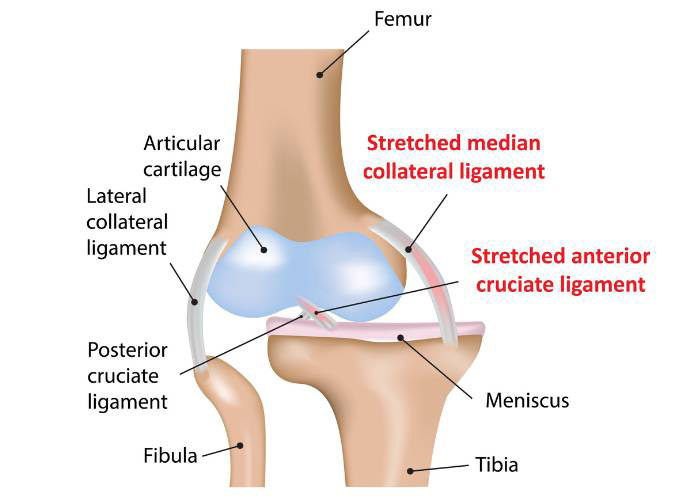
In the shoulder, vessel and nerve injuries are rare, but can cause many impairments and requires a longer recovery process. Knee dislocations are rare, but can be complicated by injuries to arteries and nerves, leading to limb-threatening complications. Degenerative changes following injury to the wrist are common, with many developing arthritis. Persistent nerve pain years after the initial trauma is not uncommon. Most finger dislocations occur in the middle of the finger (PIP) and are complicated by ligamentous injury (volar plate). Since most dislocations involving the joint near the fingertip (DIP joint) are due to trauma, there is often an associated fracture or tissue injury. Hip dislocations are at risk for osteonecrosis of the femoral head, femoral head fractures, the development of osteoarthritis, and sciatic nerve injury. Given the strength of ligaments in the foot and ankle, ankle dislocation-fractures can occur.
PIP: Proximal Interphalangeal
DIP : Distal Interphalangeal.
Details
A dislocation is the medical term for bones in one of your joints being pushed out of their usual place. They can affect any joint in your body. Dislocations almost always happen during traumas or sports injuries. Never try to push or force a dislocated joint back into place on your own.
Overview:
What is a dislocation?
Dislocation is the medical term for bones in one of your joints being knocked or pushed out of their usual place.
A joint is any place in your body where two bones meet. They’re part of your skeletal system. You have hundreds of joints throughout your body. They support your body from head to toe.
Any joint in your body can be dislocated. Dislocations can be painful and make it hard (or impossible) to use your affected joint. Dislocations can also strain or tear the tissues around your joints, including your:
* Muscles.
* Nerves.
* Tendons.
* Blood vessels.
Go to the emergency room if you experience a dislocation or can’t use a part of your body. Never try to force a joint back into place on your own.
Types of dislocations
Healthcare providers classify dislocations based on how far the bones in your joints were moved:
* Complete dislocations (luxation): A complete dislocation happens when the bones in your joint are totally separated and pushed out of place.
* Subluxation: Subluxation is the medical term for a partial dislocation. You have a subluxation if something pulls your joint apart and the bones still touch, just not as completely as usual.
How common are dislocations?
Dislocations are very common. The most commonly dislocated joints include:
* Fingers.
* Shoulders.
* Knees.
* Elbows.
* Hips.
* Jaws.
Symptoms and Causes:
What are the symptoms of a dislocation?
The most common symptoms of a dislocation include:
* Pain.
* Swelling.
* Bruising.
* The joint looking noticeably different or out of place.
* Being unable to move or use your joint.
* A feeling of instability or like the joint is weaker than usual.
Your symptoms will vary depending on which joint is affected and which type of dislocation you experience.
What causes dislocations?
Any force that’s strong enough to push a joint out of place can cause a dislocation. The most common causes are:
* Car accidents.
* Sports injuries.
* Falls.
Dislocation risk factors
Anyone can experience a dislocation, but some groups are more at risk, including people who:
* Play contact sports.
* Are older than 65.
* Have Ehlers-Danlos syndrome or another health condition that weakens connective tissues (including ligaments, tendons or muscles) around joints.
What are common complications of a dislocation?
The most common complications of dislocations are damage to the bones and tissues around your joint, including:
* Muscle strains.
* Ligament and tendon sprains.
* Nerve damage.
* Damaged blood vessels.
* Bone fractures (broken bones).
Diagnosis and Tests:
How are dislocations diagnosed?
A healthcare provider will diagnose a dislocation with a physical exam. They’ll examine your joint and the area around it. Tell your provider about any symptoms you’re experiencing and what you were doing right before your injury.
What tests are done to diagnose dislocations?
Your provider might need some of the following imaging tests to diagnose damage inside your body after a dislocation:
* X-rays.
* Magnetic resonance imaging (MRI).
* A computed tomography (CT) scan.
* Ultrasound.
Management and Treatment:
How are dislocations treated?
The most important treatment for a dislocation is putting your joint back in its correct place. Your healthcare provider might call this a relocation, manipulation or a closed reduction. They’ll carefully push and pull on the dislocated joint to move it back into alignment. Your provider might give you anesthesia or sedatives (medications that make you sleepy or feel less pain) before they relocate your joint. You might need X-rays before and after a relocation to check for broken bones in or around your joint.
Never try to reposition a dislocated joint on your own. Don’t let anyone other than a healthcare provider push your joint back into place. If you experience a dislocation, go to the emergency room right away. If possible, go to the emergency room instead of an urgent care or other clinic if you experience a dislocation. The ER is the best place to go because healthcare providers in the emergency room can get you any imaging tests and any medication you’ll need before and after they put your joint back into alignment.
Depending on which joint was dislocated, you might need other treatment, including:
* Immobilization: Wearing a splint, sling or brace will hold your joint in place while it heals.
* Medication: Your provider will tell you which medication you can take to reduce pain and inflammation. Don’t take over-the-counter (OTC) pain relievers for more than 10 days in a row without talking to your provider.
* Rest: You’ll need to avoid any physical activity that uses or puts stress on your affected joint.
Dislocation surgery
If the injury that dislocated your joint caused other damage inside your body, you might need surgery to repair it. Some people with severe dislocations need surgery to reset their joint if a closed reduction doesn’t work.
What is the recovery time after a dislocation?
Most people need at least a few weeks to recover after a dislocation. How long it takes your joint to heal depends on which joint was dislocated and if you experienced any other injuries.
A dislocated finger may feel back to normal in three weeks. A bigger joint like your shoulder could take several months or longer to heal. Your provider will tell you what to expect.
Ask your provider how long you need to wait before you resume physical activities. If you return to playing sports or working out before your joint has fully healed, you have an increased risk of reinjuring it — including dislocating it again.
Additional Information:
What are dislocations in children?
A dislocation is a joint injury. It occurs when the ends of 2 connected bones come apart. It is not common in younger children. This is because their growth plates are weaker than the muscles or tendons. Growth plates are the areas at the end of long bones where the bones grow. Dislocations happen more often among teens.
What causes a dislocation in a child?
A dislocation happens when extreme force is put on a ligament. It can occur if your child falls or takes a hit to the body, such as while playing a contact sport.
Ligaments are flexible bands of fibrous tissue. They join various bones and cartilage. They also bind the bones in a joint together. The hip and shoulder joints, for example, are called ball and socket joints. Lots of force on the ligaments in these joints can cause the head of the bone (ball) to partly or fully come out of the socket. The most commonly dislocated joint is the shoulder.
What are the symptoms of a dislocation in a child?
Each child may feel symptoms a bit differently. But below are the most common symptoms a child will have in the dislocated area:
* Pain
* Swelling
* Bruising or redness
* Numbness or weakness
* Deformity
* Trouble using or moving the joint in a normal way
These symptoms may seem like other health problems. Make sure your child sees his or her healthcare provider for a diagnosis.
How is a dislocation diagnosed in a child?
Your child’s healthcare provider makes the diagnosis with an exam. During the exam, he or she will ask about your child’s health history and how the injury happened.
Your child may also need:
* X-rays. This test makes images of internal tissues, bones, and organs.
* MRI. This test uses a combination of large magnets, radiofrequencies, and a computer to make detailed images of organs and structures within the body. An MRI is usually done only if surgery may be needed.
How is a dislocation treated in a child?
Treatment will depend on your child’s symptoms, age, and general health. It will also depend on how severe the condition is.
All dislocations need medical care right away to prevent a bone from breaking. Untreated dislocations can lead to serious problems. Treatment may include:
* RICE. This stands for rest, ice, compression, and elevation of the dislocated area.
* Repositioning. Sometimes the bone ends may go back into place by themselves. If not, your child’s healthcare provider will need to manually move the bones back into their proper position so the joint can heal.
* Splint or cast. This treatment keeps the dislocated area in place while it heals. It also protects the area from motion or use.
* Medicine. Certain medicines can ease pain.
* Traction. This treatment gently stretches the muscles and tendons around the bone ends to help with the dislocation. It uses pulleys, strings, weights, and a metal frame attached over or on the bed.
* Surgery. Your child may need this treatment if the dislocation happens again and again. It may also be done if a muscle, tendon, or ligament is badly torn.
Your child’s healthcare provider may also recommend:
* Limits on activity while the dislocation heals
* Crutches or a wheelchair so your child can move around during healing
* Physical therapy to stretch and strengthen the injured muscles, ligaments, and tendons
Key points about dislocations in children
* A dislocation happens when extreme force is put on a ligament, causing the ends of 2 bones to come apart.
* A dislocation can cause pain, swelling, and weakness. Your child may also have trouble moving the injured area.
* An exam and X-rays are often needed to diagnose a dislocation.
* The bones must be put back into their proper position so the joint can heal. Other treatments include casts, splints, pain relievers, and surgery.
It appears to me that if one wants to make progress in mathematics, one should study the masters and not the pupils. - Niels Henrik Abel.
Nothing is better than reading and gaining more and more knowledge - Stephen William Hawking.
Offline
Pages: 1