Math Is Fun Forum
You are not logged in.
- Topics: Active | Unanswered
Pages: 1
#1 2026-03-01 17:23:36
- Jai Ganesh
- Administrator

- Registered: 2005-06-28
- Posts: 53,903
Kidney Function Test
Kidney Function Test
Gist
Kidney function tests (KFT) are blood and urine analyses, including eGFRcreatinine, and BUN, designed to evaluate how efficiently your kidneys filter waste and maintain fluid balance. These tests are vital for detecting early-stage chronic kidney disease (CKD), particularly in those with diabetes or hypertension. Normal eGFR is >90 mL/min/1.73 m².
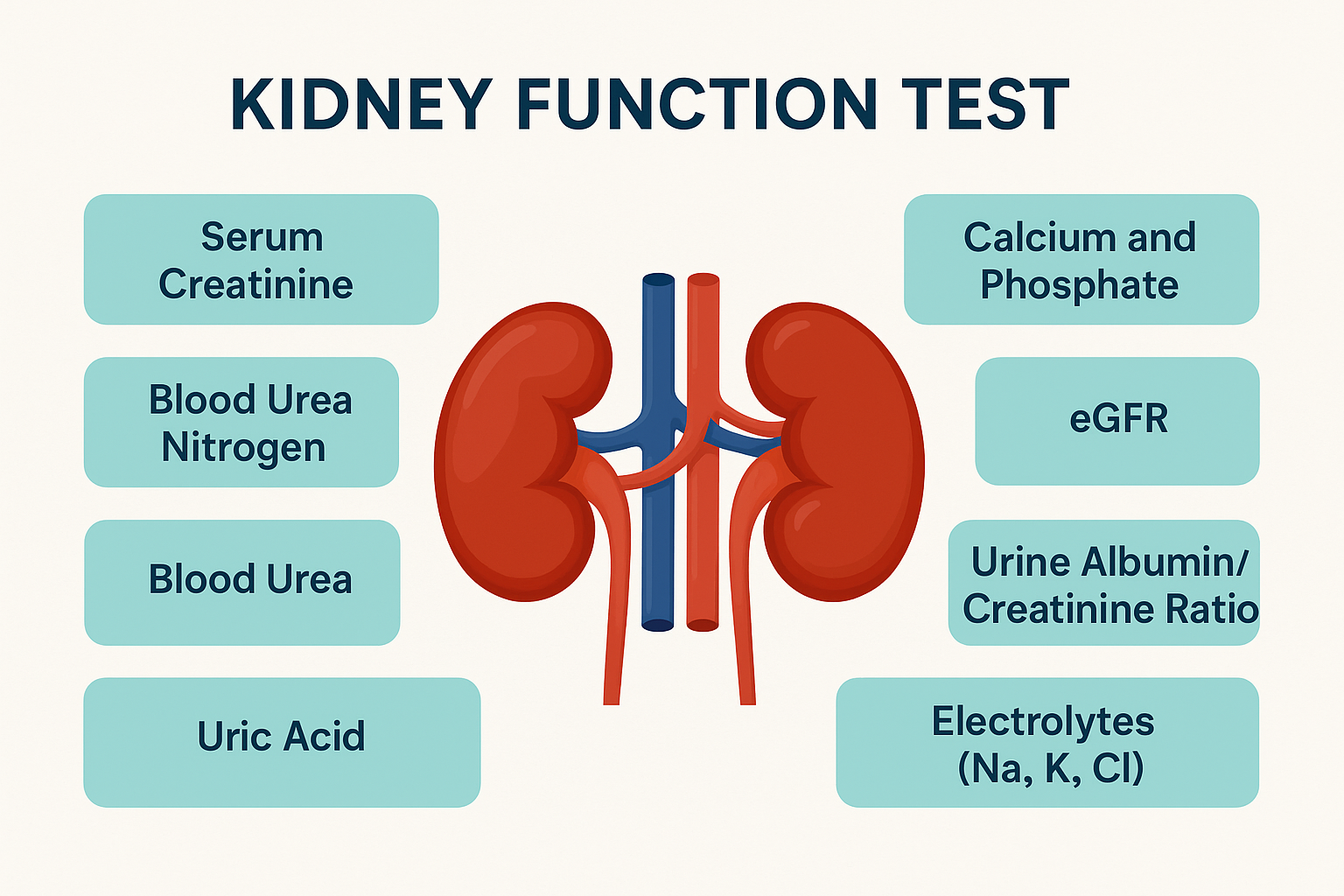
The main kidney function tests involve blood and urine analysis to check how well kidneys filter waste, primarily measuring Creatinine, Blood Urea Nitrogen (BUN), and calculating the Estimated Glomerular Filtration Rate (eGFR) from a blood test, alongside urine tests for albuminuria (protein) and other abnormalities, with imaging scans sometimes used for structural issues.
Summary
Kidney function test is any clinical and laboratory procedure designed to evaluate various aspects of renal (kidney) capacity and efficiency and to aid in the diagnosis of kidney disorders. Such tests can be divided into several categories, which include (1) concentration and dilution tests, whereby the specific gravity of urine is determined at regular time intervals following water restriction or large water intake, to measure the capacity of the kidneys to conserve water, (2) clearance tests, which give an estimate of the filtration rate of the glomeruli, the principal filtering structures of the kidneys (see inulin clearance), and overall renal blood flow (see phenolsulfonphthalein test), (3) visual and physical examination of the urine, which usually includes the recording of its physical characteristics such as colour, total volume, and specific gravity, as well as checking for the abnormal presence of pus, hyaline casts (precipitation of pure protein from the kidney tubules), and red and white blood cells; proteinuria, the presence of protein in the urine, is often the first abnormal finding indicative of kidney disease, (4) determination of the concentration of various substances in the urine, notably glucose, amino acids, phosphate, sodium, and potassium, to help detect possible impairment of the specific kidney mechanisms normally involved with their reabsorption.
In addition to clinical and laboratory tests, the use of X-rays and radioisotopes is also valuable in the diagnosis of kidney disorders.
Details
Kidney function tests measure how efficiently your kidneys are working. Most of these tests check how well your kidneys clear waste from your blood. A kidney test may involve a blood test, 24-hour urine sample or both. You usually have your test results the same day or within a few days.
Overview:
What are kidney function tests?
Kidney function tests are urine (pee) and/or blood tests that evaluate how well your kidneys work. Your kidneys support your overall health by getting rid of waste and balancing body fluids and electrolytes. Most kidney function tests measure how well your glomeruli (glo-MARE-yoo-lye) work. Your glomeruli are tiny filters in your kidney that help clean your blood. The tests measure how efficiently glomeruli clear wastes from your blood.
Kidney function tests can make you feel a little anxious. It’s hard for some people to relax for a blood draw, and it can feel weird peeing into a cup and handing it over to a healthcare provider. But they’re an important tool in monitoring your kidney health. Providers understand these feelings and will do their best to make you feel comfortable.
Another name for kidney function tests is renal function tests.
What do your kidneys do?
Your kidneys are part of your urinary system. Most people have two kidneys. They typically sit in the back of your abdomen, below your ribcage on either side of your spine. They help your body filter waste products and remove them as pee.
Your kidneys are also important for producing:
* Hormones that regulate blood pressure
* Erythropoietin, which is important for red blood cell production; red blood cells carry oxygen throughout your body
* Vitamin D, which maintains bone and muscle health
Why might I need a kidney function test?
Some conditions, like diabetes or high blood pressure (hypertension), affect how well your kidneys work. If you have a condition that affects your kidneys, a healthcare provider may use kidney function tests to help monitor the condition and your overall kidney health.
You may also need a kidney function test if you have symptoms that may indicate kidney problems. These symptoms may include:
* Blood in your pee (hematuria)
* Foamy urine (may indicate proteinuria)
* Pain or burning when you pee (dysuria)
* Frequent urges to pee
* Peeing less than expected (oliguria)
* Problems starting to pee
* Body swelling (edema)
* Feeling very tired (fatigue)
* Nausea and vomiting
* Loss of appetite
What are the types of kidney function tests?
A healthcare provider may recommend one or more different types of kidney function tests. You may have blood tests for kidney function, such as:
* Blood urea nitrogen (BUN). This test measures nitrogen in your blood. Protein makes nitrogen when it breaks down.
* Estimated GFR (eGFR). Estimated Glomerular Filtration Rate (eGFR) : This test measures your filtration rates according to your protein levels, age, sex, height and weight.
* Serum creatinine. This test looks for creatinine buildup. When your muscle tissue breaks down, it creates the waste product creatinine.
A provider may also recommend 24-hour urine tests, including:
* Microalbuminuria. This test specifically looks for the protein albumin.
* Urinalysis. This test evaluates your pee for blood, proteins, urine acidity, specific gravity and the presence of tiny, tubelike particles (casts) and crystals.
Test Details:
How do I prepare for kidney function tests?
It depends on exactly what kind of kidney function test a healthcare provider recommends.
For some blood tests, you may need to:
* Avoid eating or drinking (fast) for several hours before the test. A provider will let you know if you need to fast.
* Moisturize your arms. Moisturizing can make it easier for a provider to insert the needle and acquire your blood sample.
* Let the provider know if you’re afraid of needles (trypanophobia). They can recommend coping strategies to make yourself as comfortable as possible during the blood test.
You usually don’t have to do anything to prepare for a urine test. Make sure you drink an extra glass of water before the test to ensure you can provide a sample that’s large enough for testing. It’s also a good idea to tell a provider if you’re currently getting your period (menstruating). The presence of menstrual blood and other vaginal discharge may affect your results.
What happens during a kidney urine test?
You complete 24-hour urine tests at home. A healthcare provider will give you a container to collect pee. On the day of the test:
* Pee into the toilet as usual after you first wake up.
* For the rest of the day, pee into the container.
* On day two, pee into the container when you first wake up.
* Complete the test by dropping your sample off at the provider’s office or lab.
What happens during a kidney blood test?
For a kidney blood test, you visit a healthcare provider’s office or a lab to give a blood sample. A provider who has blood-draw training (phlebotomist) uses a small needle and test tube to collect your blood sample — usually from a vein in your arm.
What can I expect after a kidney function test?
Kidney function tests are simple and rarely pose any long-term risks. But after blood tests, some people experience:
* Bruising
* Dizziness
* Feeling very tired
Call a provider if you have pain, fatigue or other symptoms that don’t go away.
Additional Information
Kidneys are a pair of bean-shaped organs located on the back side of the abdomen. The kidney filters the blood removing the waste products as urine from the body. It helps in the regulation of electrolytes like sodium, potassium and calcium. This regulation prevents diseases like high blood pressure, diabetes etc.
Nephrons are inside kidneys, tiny structures that filter the blood, help remove waste products, and restore essential elements like electrolytes, water and glucose into the bloodstream. Moreover, it removes certain waste products like drugs and excess ions into the rine. The kidney regulates urine concentration according to hydration and body needs.
If you are concerned about your kidneys, you have come to the right place, as this blog describes renal health and the KFT test in detail.
What is the KFT or Kidney Function Test?
KFT, or Kidney Functioning Test, as its abbreviated form describes, is a blood test to determine and evaluate kidney health. It measures several parameters, like calcium, potassium, creatinine, uric acid, chloride, sodium, blood urea, blood urea nitrogen, and phosphorus. The importance of this test is that it helps to assess proper functioning of the kidneys.
The blood and urine samples will determine your renal health, from work efficiency to how effectively the waste is excreted. It is a preventative test for chronic kidney disease. The sooner the kidney disease is diagnosed, the sooner its treatment will be, and you can easily divert major complications and life-threatening situations by changing your lifestyle.
What Different Tests in KFT Help to Determine Renal Health?
KFT test evaluates parameters such as creatinine, urea, and uric acid to diagnose inflammation, infection, or damage and detect kidney disease. Here are some different tests included in KFT test that reveals everything about your renal health:
Glomerular filtration rate
The Glomerular part of the kidney ensures that essential plasma proteins are retained in the blood, and the filtrate is passed on as urine. If there is kidney damage, the kidneys are inefficient in filtering the blood as fast as they should. Depending upon the results, the physician will categorize the test results in various stages and help identify the severity of kidney disease.
However, a GFR of 60 or higher indicates healthy renal health and that your kidneys are efficiently working. However, a GFR score of less than 60 indicates kidney disease, and if the score slips down to 15 or below, it might indicate kidney failure.
Blood Urea Nitrogen (BUN)
It measures the amount of nitrogen in your bloodstream. Nitrogen is a waste product eliminated by the kidney. High BUN levels are a sign that the kidneys are not working well. However, abnormal BUN levels don't need to require medical treatment. The high BUN levels can also indicate dehydration, a high protein diet, increasing age, and the effect of certain medications.
Serum Creatinine
Besides GFR, creatinine is another essential parameter that helps access renal health. It is a byproduct of energy metabolism produced during the working of muscles. The kidney removes this creatinine in urine. A healthy working kidney should have low creatinine and high GFR values. However, the presence of high levels of creatinine in the blood signifies the presence of kidney malfunction.
Uric Acid
Uric acid is normal body waste, which is produced by the breakdown of purine, a natural substance produced in the body. In healthy individuals, uric acid is excreted in the urine, but in the presence of kidney diseases, this urine accumulates in the blood. It is considered high when it is over 7 milligrams per deciliter for men and over 6 milligrams per deciliter for women.
The uric acid is considered less when it is less than 2 milligrams per deciliter. High and low uric acid levels are risky as high uric acid is associated with gout and kidney stones, and low uric acid is associated with neurological disorders and kidney stones.
Major Causes Affecting Renal Health
The two major factors that contribute to affect kidney health are:
* Type 1 and Type 2 Diabetes -
Prolonged high glucose levels damage the blood vessels in the kidneys leading to diabetic nephropathy.
* High Blood Pressure
High blood pressure weakens and damages the arteries around the kidneys with time, reducing the blood flow to the kidney tissue. The damaged tissues would not be able to filter the blood efficiently.
Signs And Symptoms to Get A KFT Test
Here are some signs indicating kidney problems, and the doctor might recommend a KFT test to evaluate the renal health:
* High blood pressure
* Diabetes
* Blood in urine
* Pain during urination
* Swelling in hand and feet
* Difficulty urinating
* Family history of kidney-damaging condition
* Old age (above 60)
* Smoking
* Obesity
* Frequent use of medication that can cause kidney damage.
Summing up,
Every organ in our body plays a fundamental role, and the kidney helps filter your blood and remove all the waste. The modern-lifestyle approaches and poor eating habits can affect renal health, eventually leading to chronic kidney disease or kidney failure.
One of the best ways to maintain kidney function is choosing healthy food choices, adequate sleep, regular exercise, and maintaining a healthy weight. However, it is better to get testing done to keep in tune with your body.
KFT tests can help to reveal your renal health, and you can take preventive measures to avoid complications.
It appears to me that if one wants to make progress in mathematics, one should study the masters and not the pupils. - Niels Henrik Abel.
Nothing is better than reading and gaining more and more knowledge - Stephen William Hawking.
Offline
Pages: 1