Math Is Fun Forum
You are not logged in.
- Topics: Active | Unanswered
#251 Re: Help Me ! » Archer's Arrow Enigma » 2016-12-27 17:41:43
Apparently our teacher was so sagacious he could solve this in 10 minutes. I'm utterly confused...
#252 Re: Help Me ! » Archer's Arrow Enigma » 2016-12-27 16:19:36
Do you comprehend it?
#253 Re: Help Me ! » Archer's Arrow Enigma » 2016-12-27 15:48:40
Is it perplexing to anyone?
#254 Help Me ! » Archer's Arrow Enigma » 2016-12-27 12:45:09
- Mathegocart
- Replies: 15
Hello my purveyors, I have an enigma that is unfortunately perplexing to me...
The archer wants to show his exemplary skill to his friends, so he takes on the challenge of shooting an arrow through the opposing windows of a train that's moving at 120 feet per second. Standing on a platform, the archer shoots. Luckily for him, the arrow reaches the upper right corner of a window(from his vantage point), and the arrow manages to exit through the opposing window's lower left corner(from his vantage point).
Dimensions: The top of the train is 15 ft from the railroad tracks and the tops of each window are 5 ft away from the top of the train. Each window measures 5ft by 24 ft. The (i.e, vertical)perpendicular distance between both opposing windows is 12 ft.
Questions:
If the arrow took 4 seconds to reach the upper right corner of the first window, what were a) the archer's horizontal distance from the train; b) the height of the platform on which he was standing on, if he was standing vertically when he fired the arrow from his shoulder(shoulder height is 5.5 ft). Finally, find c) the time, in seconds, it took for the arrow to hit the ground the moment the arrow left the train(express this in a fraction.)
Neglect all effects of friction, air resistance, drag, and all components of physics that would be problematic. In other words, treat everything as if they were merely points in space, and assume the arrow travelled linearly.
I have perused the problem several times, and it seems to utilize similar triangles and other interesting triangles.( the arrow travels at 65 ft/sec, though my explanation is handwaving.)
I would appreciate a solution from our sagacious members.
-Mathe
#255 Re: Help Me ! » about Absolute Value.... » 2016-12-20 07:37:36
zetafunc wrote:The important part to take away from your lecturer's solution is that is equivalent tobut mathegocart didn't do like the lecturer did, what does it changed? how the solution is
,and the sol of the teacher is :
, U {-1}.zetafunc wrote:it's important in general to go back and check whether or not the solutions you've found are actually valid.
but how to do that? I mean how to check wether or not the solution is valid or not????
how did you know the solution was fine please help with that...
Put one value that supposedly satisfies the inequality(make sure it is convenient though), and see if you can verify it to be true. You could also graph it, but that is tedious.
#256 Re: Help Me ! » about Absolute Value.... » 2016-12-20 07:30:22
Mathegocart wrote:Sometimes it is more intuitive to explain it in the alternate form, which is also applicable for absolute values.
And yes, heed zetafunc's warning, sometimes it can introduce extraneous solutions.may you please solve it like my lecturer did but in simple way without these strange number lines and +++ or ---
if you have a free time please, I need you sol with your elegant words and short steps. with greater and smaller and with interval notations.
Hmmm, those number lines are invaluable in visualizing the sets the inequalities include.
#257 Re: Help Me ! » about Absolute Value.... » 2016-12-20 07:21:12
Believe me if there is another way to help myself with, I'm sure I'll follow this way, but this is the only place that I can get help with a specific questions in math.
thank you very much.so....is this the end of the solution? but how did you do that with an absolute value? ((( I mean we must take two possibilities once in >=0 and once in < 0 )))))???
please see this following picture, is the the solution of our lecturer in the university :- what is this? I really hop you to help me with full details about that
http://store2.up-00.com/2016-12/1482256157981.jpg
I always asking him about problems but our lecturer don't show respect to who ask him about that he learning us he just writing these problems without careful and caring
...
Sometimes it is more intuitive to explain it in the alternate form, which is also applicable for absolute values.
And yes, heed zetafunc's warning, sometimes it can introduce extraneous solutions.
#258 Re: Puzzles and Games » Guess what elements! » 2016-12-19 14:53:27
Used as a pure beta emitter, has no biological role, though trace amounts found within the body.
#259 Re: Puzzles and Games » Guess what elements! » 2016-12-19 14:28:56
Next Element: isolated by Humphry Davy, essential for life.
#260 Re: Puzzles and Games » Guess what elements! » 2016-12-19 14:25:08
Strontium.
First isolated by Humphry Davy, essential for life.
#261 Re: Help Me ! » about Absolute Value.... » 2016-12-19 14:08:12
This was initially irritating to solve( some paradoxes sprung forth ), though once you convert an absolute value into its alternative form, it becomes much more tolerable.
(convert to tolerable forme)
(square both sides)*
(isolate..)
(expand both convoluted functions)
(add a negative)
(divide, while noting the particular fact to switch signs.)
We are finished, with our bombardment of mathematical operations, we were able to find the solution out of this gargantuan inequality.
#262 Re: Exercises » Profoundly Cold Mathematical Problems, #1 » 2016-12-18 15:07:02
I think that 4,5 and 7 need more explanation if the right answer is to be found.
Could you clarify how I could expound on these questions better?
#263 Re: Puzzles and Games » Guess what elements! » 2016-12-18 15:03:43
Electron configuration based on Krypton...bacteria produce skeletons based on -------- Sulfate..
#264 Re: Exercises » Profoundly Cold Mathematical Problems, #1 » 2016-12-18 14:49:31
Hi;
Well done.
#266 Re: Maths Teaching Resources » Free Computer Algebra Systems? » 2016-12-17 06:38:21
I agree, using a virtual memory setup is not what I would call good. Linux is the natural way to run Sage. The other options, Geogebra and Maxima, run in windows.
I've tried to download Maxima, and I've obtained this error: error writing to file vtkCommonDataModel.dll.
#267 Exercises » Profoundly Cold Mathematical Problems, #1 » 2016-12-17 06:28:54
- Mathegocart
- Replies: 7
1. If A = , find A + 100.
2. Two points are chosen unsystematically within an circle with radius 2017. What is the expected distance between these two points?
3. What is the value of ?
4. What is the area enclosed by the polar graph cos(theta) + 2.1?(0 - 2pi)
5. A gargantuan closet contains 300 pairs of books. I choose 12 books. What is the probability that I choose at least 2 pairs?
6. Is it true that every derivative of a differentiable function is continuous?
7. I have a box filled with a myriad of snowballs. I pick 5 snowballs and their numbers are 1, 23, 99, 11, and 101. How many balls are within the box?( Convert to nearest integer)
8. Is there a number such that ?
9. Find the maximum value of cos(x)-sin(x).
10. =?
#268 Re: Maths Is Fun - Suggestions and Comments » Electricity » 2016-12-17 05:35:44
Exemplary page as always, MIF!
#269 Re: Help Me ! » about Absolute Value.... » 2016-12-17 05:30:27
#Mathegocart
yes thank you very much I got it now.
but can we say the abs -6 is -6 too? cause it is just a sign. what will happen if we say that
Previously said, the absolute value is the distance from 0. Distance, consequently, cannot be negative, and so the absolute value of -6 is simply 6.
#270 Re: Maths Teaching Resources » Free Computer Algebra Systems? » 2016-12-17 05:27:10
Mathegocart wrote:I was wondering about the most ubiquitous CASes and and I found the prices were prohibitively expensive: etc Mathematica(195 for 12-month period), MATLAB(>2000 dollars), etc etc..
I was wondering if there was a system akin to these ones....sage is free and it is great too.
it is somewhat convoluted to download Sage on a non-Linux device, unfortunately..
#271 Re: Puzzles and Games » Guess what elements! » 2016-12-16 16:04:52
Often alloyed with other elements such as Iron and Aluminum to create proficient and swift metal bodies.
#272 Re: Help Me ! » about Absolute Value.... » 2016-12-16 15:58:10
Absolute Value is its distance from 0, for instance...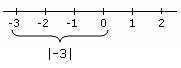 <--- We count the steps from 0( 1,2 and then 3.) We ignore the sign and count the net distance from -3 to 0(aka 3).
The absolute value of negative 6 is 6, since it is 6 away from 0 on the number line..
#273 Maths Teaching Resources » Free Computer Algebra Systems? » 2016-12-16 15:17:07
- Mathegocart
- Replies: 12
I was wondering about the most ubiquitous CASes and and I found the prices were prohibitively expensive: etc Mathematica(195 for 12-month period), MATLAB(>2000 dollars), etc etc..
I was wondering if there was a system akin to these ones....
#274 Re: Help Me ! » Correct » 2016-12-16 15:13:47
Problem solved, after 10 years..
#275 Re: Maths Is Fun - Suggestions and Comments » More Topics Need » 2016-12-13 13:20:17
Means.???
Hehehe not helpful to you but all people's.... matlabI LOg
MATLABI? MATLAB?